Bashar al-Assad
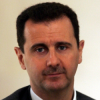
Bashar al-Assad
Bashar Hafez al-AssadLevantine pronunciation: ; born 11 September 1965) is the President of Syria, commander-in-chief of the Syrian Armed Forces, General Secretary of the ruling Ba'ath Party and Regional Secretary of the party's branch in Syria. On 10 July 2000, he was elected president succeeding Hafez al-Assad, his father, who had led Syria for 30 years and died in office a month prior. In both the Syrian presidential election, 2000 and subsequent 2007 election, Bashar Assad received votes in his...
NationalitySyrian
ProfessionPolitician
Date of Birth11 September 1965
CityDamascus, Syria
CountrySyrian Arab Republic
In reality, you cannot withstand for five years and more against all those countries, the West, and the Gulf states, the petrodollars, and all this propaganda, the strongest media corporations around the world, if you don't have the support of your own people. That's against the reality.
Politics is about realities, not logic.
Personally, I do not support the concept of suicide bombings. This is not part of our [syrian] culture. But whether you condemn them or not, suicide bombings are a reality.
They want to criticize you, let them criticize and do not worry. Just be transparent with your people and tell them this is the reality.
You have to look at the reality in Syria. Whenever we liberate any city or village from the terrorists, the civilians will go back to the city, while they flee that city when the terrorists attack that area, the opposite. So, they flee, first of all, the war itself; they flee the area under the control of the terrorists, they flee the difficult situation because of the embargo by the West on Syria.
We have more difficult circumstances than most of the Arab countries but in spite of that Syria is stable. Why? Because you have to be very closely linked to the beliefs of the people. This is the core issue.
No doubt that the U.S. is a super-power capable of conquering a relatively small country, but is it able to control it?
It is natural that we should always expect an Israeli attack, even when it does not threaten.
You in Lebanon, your power is no match to Israel. Israel, militarily, is more powerful than you and maybe it is more powerful than all the Arab countries, or most of them.
The most significant indicator that there is no disaster in Iraq is the fact that there is no exodus.
When Lebanon started its resistance it was a small and divided country.
We, in Syria, our point of view stems from our experience.
It should be known that Israel is based on treachery.
When we analyze this war in a materialistic way and ask when is it going to end and who will be the winner and the loser, it means that we do not see the endgame.