Bill Gates
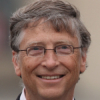
Bill Gates
William Henry "Bill" Gates IIIis an American business magnate, entrepreneur, philanthropist, investor, and programmer. In 1975, Gates and Paul Allen co-founded Microsoft, which became the world's largest PC software company. During his career at Microsoft, Gates held the positions of chairman, CEO and chief software architect, and was the largest individual shareholder until May 2014. Gates has authored and co-authored several books...
NationalityAmerican
ProfessionEntrepreneur
Date of Birth28 October 1955
CitySeattle, WA
CountryUnited States of America
We view this as a major milestone. Our original vision of a computer on every desk and every home, we've made amazing progress on that. This organization will allow us to do that faster.
I think that our progress on key diseases over the next several decades is going to be pretty amazing and so I am very interested in that.
The pace of progress in biology creates a foundation that naturally gets picked up by the biotech and pharmaceutical industry to solve rich-world diseases. This is attractive science. It's science that people want to work on.
I've been studying how quickly we can get energy out to the poor countries - a lot of which are in Africa - and how little progress we've made there. There's no more electricity today in sub-Saharan Africa per person than there was 20 years ago.
Setting clear goals and finding measures that will mark progress toward them can improve the human condition.
There certainly is a case to be made that taxes should be more progressive.
The tool that's most associated with the recent progress against malaria is the long-lasting bed net. Bed nets are a fantastic innovation. But we can do even better. We can invent new ways to control the mosquitoes that carry the malaria parasite.
Getting the video sources into the PC has been a limiting factor. We're making progress making the video content easily accessible on the PC.
There are some things that we are always thinking about. For example, when will speech recognition be good enough for everybody to use that? And we have made a lot more progress this year on that. I think we will surprise people a bit on how well we will do on our speech recognition.
It has been a great year for global health to get more visibility. The more people know about it, the more they want to act.
Jeez, get a decent computer where you can actually read the text and you're not sitting there cranking the thing while you're trying to type.
I think five or six years ago, if you'd said to people that software would be incredible in terms of making photos better, music better, TV better, phone calls very different, they would have been quite skeptical, they would have thought, 'How can software do that? Now, particularly in music and to some degree in TV, they've seen that it makes a huge difference. It allows them to pick the things that they're interested in, it allows them to see it when they want to, to share with friends what they've seen and what they like.
I see a lot of change, a lot of opportunity. We're not just talking about taking the advances of the past and suffusing them out into 100 percent of companies. We're talking about new waves, and new ways of thinking about the Internet, and that's going to keep all of our jobs very, very exciting.
I see if people are around, see what they put up on the walls. I want a little sense of what the feeling is, how lively, how much people personalize things. They put industry articles up on the walls, ones that are particularly rude to us or particul