Bill Gates
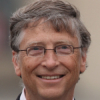
Bill Gates
William Henry "Bill" Gates IIIis an American business magnate, entrepreneur, philanthropist, investor, and programmer. In 1975, Gates and Paul Allen co-founded Microsoft, which became the world's largest PC software company. During his career at Microsoft, Gates held the positions of chairman, CEO and chief software architect, and was the largest individual shareholder until May 2014. Gates has authored and co-authored several books...
NationalityAmerican
ProfessionEntrepreneur
Date of Birth28 October 1955
CitySeattle, WA
CountryUnited States of America
There are many years where Waterloo is the university we hire the most people from of any university in the world. Waterloo has always been in the top five every year.
The one top problem we've got in hardware advances is getting everybody connected at high speeds...Most people even five years from now will probably still be connected through the phone line,
I am not topper in my university but all toppers are working in my microsoft company.
Older systems were secure because they were isolated. You can't layer on top of a system elements to make it secure; you get too much of a mismatch between the components. This design approach is absolutely critical--thinking these things through from the beginning and not bringing security in at the end is very important. This has been a big shift for Microsoft.
Reliability is top of the list (of Windows 2000 features) ... People don't want to reboot their systems ever,
I studied every thing but never topped.... But today the toppers of the best universities are my employees
In a sense this is the end of an era. Microsoft and the original PC rose to prominence based on the MS-DOS product. And even as Windows came along, Windows 3.1, Windows 95, Windows 98, underneath MS-DOS was running there. Windows simply sat on top of MS-DOS. Well, so today it really is actually the end of the MS-DOS era. It's also, we would say, the end of the Windows 95 era.
That kernel operating system ... is not the key area, it is the software you have to buy on top of that to deal with management, security and directories and things like that.
It's a concept that in the past might have been thought of as an executive information system that was just for a few top people, ... It'd take millions of dollars to set up, the system would be hard-wired, and it would provide only a subset of data. Today, in literally minutes you can add data and status reports and your personal digital dashboard will update that.
It has been a great year for global health to get more visibility. The more people know about it, the more they want to act.
Jeez, get a decent computer where you can actually read the text and you're not sitting there cranking the thing while you're trying to type.
I think five or six years ago, if you'd said to people that software would be incredible in terms of making photos better, music better, TV better, phone calls very different, they would have been quite skeptical, they would have thought, 'How can software do that? Now, particularly in music and to some degree in TV, they've seen that it makes a huge difference. It allows them to pick the things that they're interested in, it allows them to see it when they want to, to share with friends what they've seen and what they like.
I see a lot of change, a lot of opportunity. We're not just talking about taking the advances of the past and suffusing them out into 100 percent of companies. We're talking about new waves, and new ways of thinking about the Internet, and that's going to keep all of our jobs very, very exciting.
I see if people are around, see what they put up on the walls. I want a little sense of what the feeling is, how lively, how much people personalize things. They put industry articles up on the walls, ones that are particularly rude to us or particul