C. S. Lewis
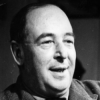
C. S. Lewis
Clive Staples Lewiswas a British novelist, poet, academic, medievalist, literary critic, essayist, lay theologian, broadcaster, lecturer, and Christian apologist. He held academic positions at both Oxford University, 1925–54, and Cambridge University, 1954–63. He is best known for his fictional work, especially The Screwtape Letters, The Chronicles of Narnia, and The Space Trilogy, and for his non-fiction Christian apologetics, such as Mere Christianity, Miracles, and The Problem of Pain...
NationalityIrish
ProfessionAuthor
Date of Birth29 November 1898
CountryIreland
After an error you need not only to remove the causes but also to correct the error itself: after a sin you must not only, if possible, remove the temptation, you must also go back and repent the sin itself. In each case an 'undoing' is required.
The human qualities of the raw materials show through. Naivety, error, contradiction, even (as in the cursing Psalms) wickedness are not removed. The total result is not "the Word of God" in the sense that every passage in itself, gives impeccable science or history. It carries the Word of God.
Satan always sends error into the world in pairs that are opposites. His great hope is that you will get so upset about one of his errors, that you'll react into the opposite one, and he's got you.
A sum can be put right: but only by going back till you find the error and working it afresh from that point, never by simply going on.
The true reader reads every work seriously in the sense that he reads it whole-heartedly, makes himself as receptive as he can. But for that very reason he cannot possibly read every work solemly or gravely. For he will read 'in the same spirit that the author writ.'... He will never commit the error of trying to munch whipped cream as if it were venison.
I do not think that all who choose wrong roads perish; but their rescue consists in being put back on the right road. A sum can be put right: but only by going back til you find the error and working it afresh from that point, never by simply going on. Evil can be undone, but it cannot 'develop' into good. Time does not heal it. The spell must be unwound, bit by bit, 'with backward mutters of dissevering power' --or else not.
A man who has lived in many places is not likely to be deceived by the local errors of his native village; the scholar has lived in many times and is therefore in some degree immune from the great cataract of nonsense that pours from the press and the microphone of his own age.
Every uncorrected error and unrepented sin is, in its own right, a fountain of fresh error and fresh sin flowing on to the end of time.
He (the devil) always sends errors into the world in pairs--pairs of opposites...He relies on your extra dislike of one to draw you gradually into the opposite one. But do not let us be fooled. We have to keep our eyes on the goal and go straight through between both errors. We have no other concern than that with either of them.
[Something] does not rise to the dignity of error.
And since we cannot deceive the whole human race all the time, it is most important thus to cut every generation off from all others; for where learning makes a free commerce between the ages there is always the danger that the characteristic errors of one may be corrected by the characteristic truths of another.
Our cause is never more in danger than when a human, no longer desiring, but still intending, to do our Enemy's will, looks round upon a universe from which every trace of Him seems to have vanished, and asks why he has been forsaken, and still obeys.
Actually it seems to me that one can hardly say anything either bad enough or good enough about life.
When Catholicism goes bad it becomes the world-old, world-wide religio of amulets and holy places and priestcraft. Protestantism,in its corresponding decay, becomes a vague mist of ethical platitudes. Catholicism is accused of being too much like all the other religions; Protestantism of being insufficiently like a religion at all. Hence Plato, with his transcendent Forms, is the doctor of Protestants; Aristotle, with his immanent Forms, the doctor of Catholics.