Edward Gibbon
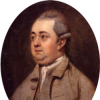
Edward Gibbon
Edward Gibbon FRS was an English historian, writer and Member of Parliament. His most important work, The History of the Decline and Fall of the Roman Empire, was published in six volumes between 1776 and 1788 and is known for the quality and irony of its prose, its use of primary sources, and its open criticism of organized religion...
NationalityEnglish
ProfessionHistorian
Date of Birth27 April 1737
regret loss practice
A state of skepticism and suspense may amuse a few inquisitive minds. But the practice of superstition is so congenial to the multitude that, if they are forcibly awakened, they still regret the loss of their pleasing vision.
men practice violence
So natural to man is the practice of violence that our indulgence allows the slightest provocation, the most disputable right, as a sufficient ground of national hostility.
law practice safety
[The] penalty of death was abolished in the Roman empire, a law of mercy most delightful to the humane theorist, but of which the practice, in a large and vicious community, is seldom consistent with the public safety.
memories writing practice
It has always been my practice to cast a long paragraph in a single mould, to try it by my ear, to deposit it in my memory, but to suspend the action of the pen till I had given the last polish to my work.
exercise government history
Under a democratical government the citizens exercise the powers of sovereignty; and those powers will be first abused, and afterwards lost, if they are committed to an unwieldy multitude.
arts english-historian habits learning original resolved
Unprovided with original learning, unformed in the habits of thinking,unskilled in the arts of composition, I resolved to write a book.
exercise greatness mind
The ascent to greatness, however steep and dangerous, may entertain an active spirit with the consciousness and exercise of its own power: but the possession of a throne could never yet afford a lasting satisfaction to an ambitious mind.
years ideas ruins
It was among the ruins of the capitol that I first conceived the idea of a work which has amused and exercised nearly twenty years of my life.
political experience should
History should be to the political economist a wellspring of experience and wisdom.
atheist ignorance atheism
Our ignorance is God; what we know is science.
pride history fabric
On the slightest touch the unsupported fabric of their pride and power fell to the ground. The expiring senate displayed a sudden lustre, blazed for a moment, and was extinguished for ever.
art sight hands
The science of the church is neglected for the study of geometry, and they lose sight of Heaven while they are employed in measuring the earth. Euclid is perpetually in their hands. Aristotle and Theophrastus are the objects of their admiration; and they express an uncommon reverence for the works of Galen. Their errors are derived from the abuse of the arts and sciences of the infidels, and they corrupt the simplicity of the gospel by the refinements of human reason.
mind age may
The ruin of Paganism, in the age of Theodosius, is perhaps the only example of the total extirpation of any ancient and popular superstition; and may therefore deserve to be considered, as a singular event in the history of the human mind.
attachment favors lasts
Suspicious princes often promote the last of mankind, from a vain persuasion that those who have no dependence except on their favor will have no attachment except to the person of their benefactor.