Edward Gibbon
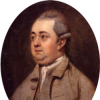
Edward Gibbon
Edward Gibbon FRS was an English historian, writer and Member of Parliament. His most important work, The History of the Decline and Fall of the Roman Empire, was published in six volumes between 1776 and 1788 and is known for the quality and irony of its prose, its use of primary sources, and its open criticism of organized religion...
NationalityEnglish
ProfessionHistorian
Date of Birth27 April 1737
two giving important
Every person has two educations, one which he receives from others, and one, more important, which he gives to himself.
government years two
The image of a free constitution was preserved with decent reverence: the Roman senate appeared to possess the sovereign authority, and devolved on the emperors all the executive powers of government. During a happy period (A.D. 98-180) of more than fourscore years, the public administration was conducted by the virtue and abilities of Nerva, Trajan, Hadrian, and the two Antonines.
two history venus
The most distinguished merit of those two officers was their respective prowess, of the one in the combats of Bacchus, of the other in those of Venus.
government years two
The two Antonines (for it is of them that we are now speaking) governed the Roman world forty-two years, with the same invariable spirit of wisdom and virtue. ... Their united reigns are possibly the only period of history in which the happiness of a great people was the sole object of government.
father character two
His manners were less pure, but his character was equally amiable with that of his father. Twenty-two acknowledged concubines, and a library of sixty-two thousand volumes, attested the variety of his inclinations, and from the productions which he left behind him, it appears that the former as well as the latter were designed for use rather than ostentation.
art two history
There are two very natural propensities which we may distinguish in the most virtuous and liberal dispositions, the love of pleasure and the love of action. If the former is refined by art and learning, improved by the charms of social intercourse, and corrected by a just regard to economy, to health, and to reputation, it is productive of the greatest part of the happiness of private life.
character years two
Both Moscow and [Kiev], the modern and the ancient capitals, were reduced to ashes [by the Tartars]; a temporary ruin, less fatal than the deep, and perhaps indelible, mark, which a servitude of two hundred years has imprinted on the character of the Russians.
christian rome two
A small number of temples was protected by the fears, the venality, the taste, or the prudence of the civil and ecclesiastical governors. The temple of the Celestial Venus at Carthage, whose sacred precincts formed a circumference of two miles, was judiciously converted into a Christian church; and a similar consecration has preserved inviolate the majestic dome of the Pantheon at Rome.
exercise government history
Under a democratical government the citizens exercise the powers of sovereignty; and those powers will be first abused, and afterwards lost, if they are committed to an unwieldy multitude.
arts english-historian habits learning original resolved
Unprovided with original learning, unformed in the habits of thinking,unskilled in the arts of composition, I resolved to write a book.
exercise greatness mind
The ascent to greatness, however steep and dangerous, may entertain an active spirit with the consciousness and exercise of its own power: but the possession of a throne could never yet afford a lasting satisfaction to an ambitious mind.
years ideas ruins
It was among the ruins of the capitol that I first conceived the idea of a work which has amused and exercised nearly twenty years of my life.
political experience should
History should be to the political economist a wellspring of experience and wisdom.
atheist ignorance atheism
Our ignorance is God; what we know is science.