Edward McKendree Bounds
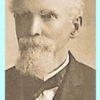
Edward McKendree Bounds
Edward McKendree Boundsprominently known as E.M. Bounds, was an American author, attorney, and member of the Methodist Episcopal Church South clergy. He is known for writing 11 books, nine of which focused on the subject of prayer. Only two of Bounds' books were published before he died. After his death, Rev. ClaudiusLysias Chilton, Jr., grandson of William Parish Chilton and admirer of Bounds, worked on preserving and preparing Bounds' collection of manuscripts for publication. By 1921, more editorial work was...
NationalityAmerican
ProfessionAuthor
Date of Birth15 August 1835
CountryUnited States of America
Men of prayer, before anything else, are indispensable to the furtherance of the kingdom of God on earth. No other sort will fit in the scheme or do the deed. Men, great and influential in other things but small in prayer, cannot do the work Almighty God has set out for His Church to do in this, His world.
To say prayers in a decent, delicate way is not heavy work. But to pray really, to pray till hell feels the ponderous stroke, to pray till the iron gates of difficulty are opened, till the mountains of obstacles are removed, till the mists are exhaled and the clouds are lifted, and the sunshine of a cloudless day brightens-this is hard work, but it is God's work, and man's best labor.
Every preacher who does not make prayer a mighty factor in his own life and ministry is weak as a factor in God's work and is powerless to project God's cause in this world.
When we say that prayer puts God to work, it is simply to say that man has it in his power by prayer to move God to work in His own way among men, in which way He would not work if prayer was not made.
Prayer lays hold upon God and influences Him to work. This is the meaning of prayer as it concerns God. This is the doctrine of prayer, or else there is nothing whatever in prayer.
The preacher's sharpest and strongest preaching should be to himself. His most difficult, delicate, laborious, and thorough work must be with himself.
If prayer puts God to work on earth, then, by the same token, prayerlessness rules God out of the world's affairs and prevents Him from working.
The most casual reader of the New Testament can scarcely fail to see the commanding position the resurrection of Christ holds in Christianity. It is the creator of its new and brighter hopes, of its richer and stronger faith, of its deeper and more exalted experience.
The Holy Ghost does not flow through methods, but through men. He does not come on machinery, but on men. He does not anoint plans, but men - men of prayer.
Faith accepts the Bible as the word and will of God and rests upon its truth without question and without other evidence.
Christianity is not rationalism, but faith in God's revelation. A conspicuous, all-important item in that revelation is the resurrection of the body.
Man's access in prayer to God opens everything and makes his impoverishment his wealth. All things are his through prayer.
In all God's plans for human redemption, He proposes that men pray. The men are to pray in every place, in the church, in the closet, in the home, on sacred days and on secular days.
The life-giving preacher is a man of God, whose heart is ever athirst for God, whose soul is ever following hard after God, whose eye is single to God, and in whom by the power of God's Spirit the flesh and the world have been crucified, and his ministry is like the generous flood of a life-giving river.