G. Stanley Hall
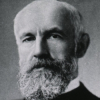
G. Stanley Hall
Granville Stanley Hallwas a pioneering American psychologist and educator. His interests focused on childhood development and evolutionary theory. Hall was the first president of the American Psychological Association and the first president of Clark University. A Review of General Psychology survey, published in 2002, ranked Hall as the 72nd most cited psychologist of the 20th century, in a tie with Lewis Terman...
NationalityAmerican
ProfessionPsychologist
Date of Birth1 February 1844
CountryUnited States of America
Every theory of love, from Plato down, teaches that each individual loves in the other sex what he lacks in himself.
Muscles are in a most intimate and peculiar sense the organs of the will.
Every theory of love, from Plato down teaches that each individual loves in the other sex what he lacks in himself.
The years from about eight to twelve constitute a unique period of human life.
Constant muscular activity was natural for the child, and, therefore, the immense effort of the drillmaster teachers to make children sit still was harmful and useless.
This splendid subject [mathematics], queen of all exact sciences, and the ideal and norm of all careful thinking...
Daily contact with some teachers is itself all-sided ethical education for the child without a spoken precept. Here, too, the real advantage of male over female teachers,especially for boys, is seen in their superior physical strength,which often, if highly estimated, gives real dignity and commands real respect, and especially in the unquestionably greater uniformity of their moods and their discipline.
Adolescence is a new birth, for the higher and more completely human traits are now born.
All possible truth is practical. To ask whether our conception of chair or table corresponds to the real chair or table apart from the uses to which they may be put, is as utterly meaningless and vain as to inquire whether a musical tone is red or yellow. No other conceivable relation than this between ideas and things can exist. The unknowable is what I cannot react upon. The active part of our nature is not only an essential part of cognition itself, but it always has a voice in determining what shall be believed and what rejected.
Precisely what menstruation is, is not yet very well known.
Muscles are in a most intimate and peculiar sense the organs of the will. They have built all the roads, cities and machines in the world, written all the books, spoken all the words, and, in fact done everything that man has accomplished with matter. Character might be a sense defined as a plexus of motor habits.
Education has now become the chief problem of the world, its one holy cause. The nations that see this will survive, and those that fail to do so will slowly perish. . . . There must be re-education of the will and of the heart as well as of the intellect; and the ideals of service must supplant those of selfishness and greed.
Oneness with Nature is the glory of childhood; oneness with childhood is the glory of the Teacher.
The teens are emotionally unstable and pathic. It is a natural impulse to experience hot and perfervid psychic states, and it is characterized by emotionalism. We see here the instability and fluctuations now so characteristic. The emotions develop by contrast and reaction into the opposite.