Georg Brandes
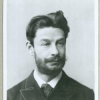
Georg Brandes
Georg Brandes, born Morris Cohen, was a Danish critic and scholar who greatly influenced Scandinavian and European literature from the 1870s through the turn of the 20th century. He is seen as the theorist behind the "Modern Breakthrough" of Scandinavian culture. At the age of 30, Brandes formulated the principles of a new realism and naturalism, condemning hyper-aesthetic writing and also fantasy in literature. His literary goals were shared by some other authors, among them the Norwegian "realist" playwright Henrik...
NationalityDanish
ProfessionCritic
Date of Birth4 February 1842
CountryDenmark
I had an exceedingly keen eye for the ridiculous, and easily influenced as I still was, I could not content myself with a smile.
Just about this time, when in imagination I was so great a warrior, I had good use in real life for more strength, as I was no longer taken to school by the nurse, but instead had myself to protect my brother, two years my junior.
It appears to [Nietzsche] that the modern age has produced for imitation three types of man ... First, Rousseau's man, the Titan who raises himself ... and in his need calls upon holy nature. Then Goethe's man ... a spectator of the world ... [Third] Schopenhauer's man ... voluntarily takes upon himself the pain of telling the truth.
We need only think of the number of talented men who sooner or later make their apologies and concessions to philistinism, so as to be permitted to exist.
What is public opinion? It is private indolence.
[Nietzsche] attributes to himself an extremely vivid and sensitive instinct of cleanliness. At the first contact the filth lying at the base of another's nature is revealed to him. The unclean are therefore ill at ease hi his presence
The crowd will follow a leader who marches twenty paces ahead of them, but if he is a thousand paces ahead of them, they will neither see nor follow him.
My father, though, could run very much faster. It was impossible to compete with him on the grass. But it was astonishing how slow old people were. Some of them could not run up a hill and called it trying to climb stairs.
I was always hearing that I was pale and thin and small.
I was not afraid of what I did not like. To overcome dislike of a thing often satisfied one's feeling of honour.
Being gifted needs courage.
It was jolly in the country. A cow and little pigs to play with and milk warm from the cow.
I was a town child, it is true, but that did not prevent me enjoying open-air life, with plants and animals.
Forgetfulness, the unhistorical, is ... the atmosphere, in which alone life can come into being. In order to understand it, let us imagine a youth who is seized with a passion for a woman, or a man who is swayed by a passion for his work. In both cases what lies behind them has ceased to exist and yet this state (the most unhistorical that can be imagined) is that in which every action, every great deed is conceived and accomplished.