George Soros
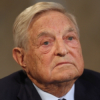
George Soros
George Sorosis a Hungarian-American business magnate, investor, philanthropist, political activist and author who is of Hungarian-Jewish ancestry and holds dual citizenship. He is chairman of Soros Fund Management. He is known as "The Man Who Broke the Bank of England" because of his short sale of US$10 billion worth of pounds, making him a profit of $1 billion during the 1992 Black Wednesday UK currency crisis. Soros is one of the 30 richest people in the world...
NationalityHungarian
ProfessionEntrepreneur
Date of Birth12 August 1930
CityBudapest, Hungary
I contend that financial markets never reflect the underlying reality accurately; they always distort it in some way or another and the distortions find expression in market prices. Those distortions can, occasionally, find ways to affect the fundamentals that market prices are supposed to reflect.
Fundamental analysis seeks to establish how underlying values are reflected in stock prices, whereas the theory of reflexivity shows how stock prices can influence underlying values
In certain circumstances, financial markets can affect the so-called fundamentals which they are supposed to reflect. When that happens, markets enter into a state of dynamic disequilibrium and behave quite differently from what would be considered normal by the theory of efficient markets. Such boom/bust sequences do not arise very often, but when they do, they can be very disruptive, exactly because they affect the fundamentals of the economy.
I think the whole idea of eradicating the drug problem is a false idea, ... You can discourage the use of drugs, you can forbid the use of drugs, you can treat people who are addicted to drugs, but you cannot eradicate drugs. Once you accept this point, you may be able to develop a more rational approach to the problem.
Over half of all AIDS cases involving children are directly related to unclean syringes,
I think I lost my touch some time ago. I'm like an aging boxer that should not go into the ring,
Most of the capital (in Indonesia) is in the hands of limited business groups, which don't feel so secure here. Any slightest risk will cause them take their money to Singapore.
Markets are constantly in a state of uncertainty and flux and money is make by discounting the obvious and betting on the unexpected.
The absurdity of its illegality has been clear to me for some time. I learned about pot from my kids and realized it was a lot better than Scotch, and I loved the Scotch. Then I went to my doctor, and he said, 'I'm thrilled. You're drinking too much. You're much better off doing pot than drinking.'
I would prefer not to be involved in party politics.
Unrestrained competition can drive people into actions that they would otherwise regret.
My foundations support people in the country who care about an open society. It's their work that I'm supporting. So it's not me doing it. But I can empower them. I can support them, and I can help them.
Market fundamentalists recognize that the role of the state in the economy is always disruptive, inefficient, and generally has negative connotations. This leads them to believe that the market mechanism can take care of all the problems.
This segment has considerable momentum and people are not ready to jump ship as long as prices are rising,