Gottfried Leibniz
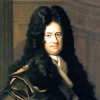
Gottfried Leibniz
Gottfried Wilhelm von Leibnizwas a German polymath and philosopher who occupies a prominent place in the history of mathematics and the history of philosophy, having developed differential and integral calculus independently of Isaac Newton. Leibniz's notation has been widely used ever since it was published. It was only in the 20th century that his Law of Continuity and Transcendental Law of Homogeneity found mathematical implementation. He became one of the most prolific inventors in the field of mechanical calculators. While...
NationalityGerman
ProfessionPhilosopher
Date of Birth1 July 1646
CityLeipzig, Germany
CountryGermany
Finally there are simple ideas of which no definition can be given; there are also axioms or postulates, or in a word primary principles, which cannot be proved and have no need of proof.
It can have its effect only through the intervention of God, inasmuch as in the ideas of God a monad rightly demands that God, in regulating the rest from the beginning of things, should have regard to itself.
I maintain also that substances, whether material or immaterial, cannot be conceived in their bare essence without any activity, activity being of the essence of substance in general.
It follows from what we have just said, that the natural changes of monads come from an internal principle, since an external cause would be unable to influence their inner being.
There are also two kinds of truths: truth of reasoning and truths of fact. Truths of reasoning are necessary and their opposite is impossible; those of fact are contingent and their opposite is possible.
This is why the ultimate reason of things must lie in a necessary substance, in which the differentiation of the changes only exists eminently as in their source; and this is what we call God.
Indeed in general I hold that there is nothing truer than happiness, and nothing happier and sweeter than truth.
For things remain possible, even if God does not choose them. Indeed, even if God does not will something to exist, it is possible for it to exist, since, by its nature, it could exist if God were to will it to exist.
There is nothing without reason.
I also readily admit that there are animals, taken in the ordinary sense, that are incomparably larger than those we know of, and I have sometimes said in jest that there might be a system like ours which is the pocketwatch of some enormous giant.
All the different classes of beings which taken together make up the universe are, in the ideas of God who knows distinctly their essential gradations, only so many ordinates of a single curve so closely united that it would be impossible to place others between any two of them, since that would imply disorder and imperfection. Thus men are linked with the animals, these with the plants and these with the fossils which in turn merge with those bodies which our senses and our imagination represent to us as absolutely inanimate.
It is God who is the ultimate reason things, and the Knowledge of God is no less the beginning of science than his essence and will are the beginning of things.
I am convinced that the unwritten knowledge scattered among men of different callings surpasses in quantity and in importance anything we find in books, and that the greater part of our wealth has yet to be recorded.
According to their [Newton and his followers] doctrine, God Almighty wants to wind up his watch from time to time: otherwise it would cease to move. He had not, it seems, sufficient foresight to make it a perpetual motion. Nay, the machine of God's making, so imperfect, according to these gentlemen; that he is obliged to clean it now and then by an extraordinary concourse, and even to mend it, as clockmaker mends his work.