Isaac Newton
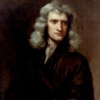
Isaac Newton
Sir Isaac Newton PRSwas an English physicist and mathematicianwho is widely recognised as one of the most influential scientists of all time and a key figure in the scientific revolution. His book Philosophiæ Naturalis Principia Mathematica, first published in 1687, laid the foundations for classical mechanics. Newton made seminal contributions to optics, and he shares credit with Gottfried Wilhelm Leibniz for the development of calculus...
NationalityEnglish
ProfessionScientist
Date of Birth4 January 1643
CityWoolsthorpe, England
My principal method for defeating error and heresy is by establishing the truth. One purposes to fill a bushel with tares, but if I can fill it first with wheat, I may defy his attempts.
Errors are not in the art but in the artificers.
A Vulgar Mechanick can practice what he has been taught or seen done, but if he is in an error he knows not how to find it out and correct it, and if you put him out of his road he is at a stand. Whereas he that is able to reason nimbly and judiciously about figure, force, and motion, is never at rest till he gets over every rub. (from a letter dated 25 May, 1694)
I was like a boy playing on the sea-shore, and diverting myself now and then finding a smoother pebble or a prettier shell than ordinary, whilst the great ocean of truth lay all undiscovered before me.
The word 'God' usually signifies 'Lord', but every lord is not a God. It is the dominion of a spiritual being which constitutes a God: a true, supreme, or imaginary dominion makes a true, supreme, or imaginary God.
The smaller the planets are, they are, other things being equal, of so much the greater density; for so the powers of gravity on their several surfaces come nearer to equality. They are likewise, other things being equal, of the greater density, as they are nearer to the sun.
The same thing is to be understood of all bodies, revolved in any orbits. They all endeavour to recede from the centres of their orbits, and were it not for the opposition of a contrary force which restrains them to and detains them in their orbits, which I therefore call Centripetal, would fly off in right lines with a uniform motion.
The same law takes place in a system, consisting of many bodies, as in one single body, with regard to their persevering in their state of motion or of rest. For the progressive motion, whether of one single body or of a whole system of bodies, is always to be estimated from the motion of the center of gravity.
The hypothesis of matter's being at first evenly spread through the heavens is, in my opinion, inconsistent with the hypothesis of innate gravity without a supernatural power to reconcile them, and therefore, it infers a deity.
The ancients considered mechanics in a twofold respect: as rational, which proceeds accurately by demonstration, and practical. To practical mechanics all the manual arts belong, from which mechanics took its name.
Resistance is usually ascribed to bodies at rest, and impulse to those in motion, but motion and rest, as commonly conceived, are only relatively distinguished; nor are those bodies always truly at rest, which commonly are taken to be so.
It is reasonable that forces directed toward bodies depend on the nature and the quantity of matter of such bodies, as happens in the case of magnetic bodies.
In the beginning of the year 1665, I found the method of approximating series and the rule for reducing any dignity of any binomial into such a series.
In experimental philosophy, we are to look upon propositions inferred by general induction from phenomena as accurately or very nearly true, notwithstanding any contrary hypotheses that may be imagined, till such time as other phenomena occur by which they may either be made more accurate or liable to exceptions.