J. R. R. Tolkien
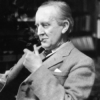
J. R. R. Tolkien
John Ronald Reuel Tolkien CBE, FRSL, known by his pen name J. R. R. Tolkien, was an English writer, poet, philologist, and university professor who is best known as the author of the classic high-fantasy works The Hobbit, The Lord of the Rings, and The Silmarillion...
NationalityEnglish
ProfessionNovelist
Date of Birth3 January 1892
hands climbing tree
Haldir had gone on and was now climbing to the high flet. As Frodo prepared to follow him, he laid his hand upon the tree beside the ladder: never before had he been so suddenly and so keenly aware of the feel and texture of a tree's skin and of the life within it. He felt a delight in wood and the touch of it, neither as forester nor as carpenter; it was the delight of the living tree itself.
morning memories climbing
Eastward the dawn rose, ridge behind ridge into the morning, and vanished out of eyesight into guess; it was no more than a glimmer blending with the hem of the sky, but it spoke to them, out of the memory and old tales, of the high and distant mountains.
aside axe black blood cast cried last smoked stood sung time until
Last of all Hurin stood alone. Then he cast aside his shield, and wielded an axe two-handed; and it is sung that the axe smoked in the black blood of the troll-guard of Gothmog until it withered, and each time that he slew Hurin cried 'Aure entuluva!
dangerous knowing might onto remember step swept travel
Remember what Bilbo used to say: It's a dangerous business, Frodo, going out your door. You step onto the road, and if you don't keep your feet, there's no knowing where you might be swept off to.
adventures bringing disbelieve escapes fine hand mere per sole surely
Surely you do not disbelieve the prophecies, because you had a hand in bringing them about yourself? You don't really suppose, do you, that all your adventures and escapes were managed by mere luck, just for your sole benefit? You are a very fine per
language languages life wants wish
I wish life was not so short, he thought. languages take such a time, and so do all the things one wants to know about.
art contain elements form known moral myth primary reflect religious truth
Myth and fairy-story must, as all art, reflect and contain in solution elements of moral and religious truth (or error), but not explicit, not in the known form of the primary 'real' world.
almost begin corner detailed english exciting fall far field middle notions personal pieces received seem soon turns
Middle English is an exciting field - almost uncharted, I begin to think, because as soon as one turns detailed personal attention on to any little corner of it, the received notions and ideas seem to crumple up and fall to pieces - as far as language goes, at any rate.
costs indeed unlimited written
They say it is the first step that costs the effort. I do not find it so. I am sure I could write unlimited 'first chapters'. I have indeed written many.
disliked exactly far indeed languages later liked longer men nearer plain relationship spite spoke
It is plain indeed that in spite of later estrangement Hobbits are relatives of ours: far nearer to us than Elves, or even than Dwarves. Of old they spoke the languages of Men, after their own fashion, and liked and disliked much the same things as Men did. But what exactly our relationship is can no longer be discovered.
bend lord share
There is only one Lord of the Ring, only one who can bend it to his will. And he does not share power.
friendship offers tolkien
Tolkien offers sympathy, surrender, friendship and, most of all, forgiveness.
inspiring travel positivity
Still round the corner there may wait, A new road or a secret gate.
fair fall flower frost house knew lady looked perceived sap saw seemed soon speak standing straight turned white wrought
For she is a fair maiden, fairest lady of a house of queens. And yet I know not how I should speak of her. When I first looked on her and perceived her unhappiness, it seemed to me that I saw a white flower standing straight and proud, shapely as a lily, and yet knew that it was hard, as if wrought by elf-wrights out of steel. Or was it, maybe, a frost that had turned its sap to ice, and so it stood, bitter-sweet, still fair to see, but stricken, soon to fall and die?