Jackie Joyner-Kersee
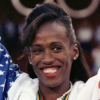
Jackie Joyner-Kersee
Jacqueline "Jackie" Joyner-Kerseeis an American retired track and field athlete, ranked among the all-time greatest athletes in the women's heptathlon as well as in the women's long jump. She won three gold, one silver, and two bronze Olympic medals, in those two events at four different Olympic Games. Sports Illustrated for Women magazine voted Joyner-Kersee the Greatest Female Athlete of the 20th century, just ahead of Babe Didrikson Zaharias...
NationalityAmerican
ProfessionRunner
Date of Birth3 March 1962
CitySt. Louis, MO
CountryUnited States of America
There are a lot of other people that really play a significant role in helping you become an Olympian.
I always have been trying to work on the other side of Jackie, and that is, making sure that my appearance, that my image, is right; also, working in the job world, knowing how it is to wake up and go to a job.
Even though I'm not a competitive athlete, I have to still maintain things and try to keep myself fit because I am at that age where I need to make sure to get those regular checkups and make sure everything is in tact.
Some people are embarrassed to say they came from East St. Louis, Ill., but now more people want to claim it. I grew up in a community center and I knew what it gave me. I always knew I wanted to give back and help people because people helped me.
I have this burning desire to get out there and do my best. It's as if I'm keeping it all in a little bottle, and it's all going to come out when I do the best I'm capable of doing.
Growing up in the time of Title IX - it was passed when I was 10 - I got a front-row seat to so many great moments in women's sports. Of course I didn't know it at the time.
People assume that because I'm a great athlete, I can dance. But no. My rhythm is off a little bit.
don't want to put that capital in there, we can't force them as human beings. We can't do that.
Your environment doesn't define you. I don't have a lot of money, but I can help train people and I can talk to people. We can all be mentors to the next generation.
Competing in both track and field and basketball for the Bruins I have a lot of great memories to choose from. But my all-time favorite moment in collegiate sports has to be in 1982 when we won UCLA's first NCAA title in track.
There are few restrictions on your life with asthma, as long as you take care of yourself.
When I was in elementary school, we weren't allowed to do sports other than cheerleading. By junior high, they let us play, but we had to come back after 6:30 p.m. to practice because there was only one gymnasium and the boys used it first.
I was diagnosed with asthma when I was 18 during my freshman year at UCLA. I refused to accept it - and I hid it from my coaches and teammates. But ignoring my problem didn't make it go away.
There are many women who came before me who didn't really have the same opportunities that I have had. That's why I always wanted to be a great ambassador - not only today's generation - but for the women who really didn't have a voice, but who paved the way for me.