Jean-Bertrand Aristide
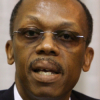
Jean-Bertrand Aristide
Jean-Bertrand Aristideis a Haitian politician who became Haiti's first democratically elected president. A proponent of liberation theology, Aristide was appointed to a Roman Catholic parish in Port-au-Prince in 1982 after completing his studies to become a priest of the Salesian order. He became a focal point for the pro-democracy movement first under Jean-Claude "Baby Doc" Duvalier and then under the military transition regime which followed. He won the Haitian general election between 1990 and 1991, with 67% of the vote...
NationalityHaitian
ProfessionStatesman
Date of Birth15 July 1953
CountryHaiti
Chopped down the tree of peace, but it will grow again.
If we wish to maintain peace, then we cannot accept that impunity be provided to these international criminals and drug dealers.
Blood has flowed in Hinche, ... It may be that the police cannot cope with this kind of attack.
None of these difficulties can be invoked by state agents to justify violations of human rights committed in total impunity.
Far from home, I am living here, but always in deep communion with my people.
Before the elections of the year 2000 which led me for the second time to the National Palace in Haiti, I had talked about peace, ... And throughout in the National Palace, throughout my tenure, I talked about peace. And today I continue to talk about peace.
Haitians don't like to say they are hungry because we are proud.
We are all equal, rich and poor, and we need a society where the people enjoy their rights.
Of course, learning is strengthened and solidified when it occurs in a safe, secure and normal environment.
The first time Haiti had free and fair democratic elections was 1990, when I was elected.
The future of Haiti must be linked to the respect of the rights of every single citizen.
Pa gen lape nan tet, si pa gen lape nan vant (there is no peace in the head if there is no peace in the stomach).
We have not reached the consensus that to eat is a basic human right. This is an ethical crisis. This is a crisis of faith.
As we all know, many people remain buried under tons of rubble and debris, waiting to be rescued. When we think of their suffering, we feel deeply and profoundly that we should be there, in Haiti, with them, trying our best to prevent death.