John Adams
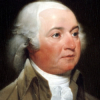
John Adams
John Adamswas an American lawyer, author, statesman, and diplomat. He served as the second President of the United States, the first Vice President, and as a Founding Father was a leader of American independence from Great Britain. Adams was a political theorist in the Age of Enlightenment who promoted republicanism and a strong central government. His innovative ideas were frequently published. He was also a dedicated diarist and correspondent, particularly with his wife and key advisor Abigail...
NationalityAmerican
ProfessionPresident
Date of Birth30 October 1735
CountryUnited States of America
If we do not lay out ourselves in the service of mankind whom should we serve?
I would quarrel with both parties, and with every individual of each, before I would subjugate my understanding, or prostitute my tongue or pen to either.
It may be the will of Heaven that America shall suffer calamities still more wasting, and distresses yet more dreadful. If this is to be the case, it will have the good effect at least. It will inspire us with many virtues, which we have not, and correct many errors, follies and vices . . . But I must submit all my hopes and fears to an overruling Providence, in which, unfashionable as the faith may be, I firmly believe.
Rulers are no more than attorneys, agents, and trustees, for the people; and if the cause, the interest and trust, is insidiously betrayed, or wantonly trifled away, the people have a right to revoke the authority that they themselves have deputed, and to constitute abler and better agents, attorneys, and trustees.
We are in the the very midst of a revolution, the most complete, unexpected and remarkable of any in the history of nations.
We hold that each man is the best judge of his own interest.
It is weakness rather than wickedness which renders men unfit to be trusted with unlimited power.
I never engaged in public affairs for my own interest, pleasure, envy, jealousy, avarice or ambition, or even the desire of fame
By the former of these (canon law), the most refined, sublime, extensive, and astonishing constitution of policy that ever was conceived by the mind of man was framed by the Romish clergy for the aggrandizement of their own order.
Numberless have been the systems of iniquity contrived by the great for the gratification of this passion in themselves; but in none of them were they ever more successful than in the invention and establishment of the canon and the feudal law.
I didn't grow up imagining myself as an opera composer. Only once in my entire adolescence did I attend an opera. I went and saw Aida at the old Met, didn't understand a thing about it, and thought it was pretty awful. But I think I had it in my genes without even realising it.
Twenty times, in the course of my late reading, have I been on the point of breaking out, 'this would be the best of all possible worlds, if there were no religion in it!' But in this exclamation, I should have been as fanatical as Bryant or Cleverly. Without religion, this world would be something not fit to be mentioned in public company-I mean hell.
July 4th ought to be commemorated as the day of deliverance by solemn acts of devotion.
If the Christian religion, as I understand it, or as you understand it, should maintain its ground, as I believe it will, yet Platonic, Pythagoric, Hindoo, and cabalistical Christianity, which is Catholic Christianity, and which has prevailed for 1500 years, has received a mortal wound, of which the monster must finally die. Yet so strong is his constitution, that he may endure for centuries before he expires.