John Searle
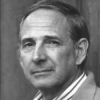
John Searle
John Rogers Searleis an American philosopher and currently the Slusser Professor of Philosophy at the University of California, Berkeley. Widely noted for his contributions to the philosophy of language, philosophy of mind and social philosophy, he began teaching at Berkeley in 1959. He received the Jean Nicod Prize in 2000; the National Humanities Medal in 2004; and the Mind & Brain Prize in 2006. Among his notable concepts is the "Chinese room" argument against "strong" artificial intelligence...
NationalityAmerican
ProfessionPhilosopher
Date of Birth1 December 1932
CountryUnited States of America
The ascription of an unconscious intentional phenomenon to a system implies that the phenomenon is in principle accessible to consciousness.
There are clear cases in which 'understanding' literally applies and clear cases in which it does not apply; and these two sorts of cases are all I need for this argument.
Berkeley became a left-wing community as a result of the '60s. The university is about the same as it was before politically. But the city is much more to the left than it was prior to all of this.
I want to block some common misunderstandings about "understanding": In many of these discussions one finds a lot of fancy footwork about the word "understanding.
There is no success or failure in Nature.
Akrasia" [weakness of will] in rational beings is as common as wine in France.
Where questions of style and exposition are concerned I try to follow a simple maxim: if you can't say it clearly you don't understand it yourself
Where conscious subjectivity is concerned, there is no distinction between the observation and the thing observed
In many cases it is a matter for decision and not a simple matter of fact whether x understands y; and so on
Our tools are extensions of our purposes, and so we find it natural to make metaphorical attributions of intentionality to them; but I take it no philosophical ice is cut by such examples
Materialism ends up denying the existence of any irreducible subjective qualitative states of sentience or awareness.
The general nature of the speech act fallacy can be stated as follows, using "good" as our example. Calling something good is characteristically praising or commending or recommending it, etc. But it is a fallacy to infer from this that the meaning of "good" is explained by saying it is used to perform the act of commendation.
Nowadays nobody bothers, and it is considered in slightly bad taste to even raise the question of God's existence. Matters of religion are like matters of sexual preference: they are not discussed in public, and even the abstract questions are discussed only by bores.
It seems to me obvious that infants and many animals that do not in any ordinary sense have a language or perform speech acts nonetheless have Intentional states. Only someone in the grip of a philosophical theory would deny that small babies can literally be said to want milk and that dogs want to be let out or believe that their master is at the door.