Karl Jaspers
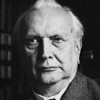
Karl Jaspers
Karl Theodor Jasperswas a German-Swiss psychiatrist and philosopher who had a strong influence on modern theology, psychiatry, and philosophy. After being trained in and practicing psychiatry, Jaspers turned to philosophical inquiry and attempted to discover an innovative philosophical system. He was often viewed as a major exponent of existentialism in Germany, though he did not accept this label...
NationalityGerman
ProfessionPsychologist
Date of Birth23 February 1883
CountryGermany
The 'public' is a phantom, the phantom of an opinion supposed to exist in a vast number of persons who have no effective interrelation and though the opinion is not effectively present in the units. Such an opinion is spoken of as 'public opinion,' a fiction which is appealed to by individuals and by groups as supporting their special views. It is impalpable, illusory, transient; ''tis here, 'tis there, 'tis gone'; a nullity which can nevertheless for a moment endow the multitude with power to uplift or destroy.
The Greek word for philosopher (philosophos) connotes a distinction from sophos. It signifies the lover of wisdom (knowledge) as distinguished from him who considers himself wise in the possession of knowledge. This meaning of the word still endures: the essence of philosophy is not the possession of the truth but the search for truth....Philosophy means to be on the way. Its questions are more essential than its answers, and every answer becomes a new question.
With the disintegration of all that [Nietzsche] had revered, existence, to him, had become a desert in which only one thing remained, namely that which had relentlessly forced him into this path: truthfulness that knows no limits and is not subject to any condition.
A scientific approach means knowing what one knows and what one doesn't. Absolute or complete knowledge is unscientific.
On the question of the world as a whole, science founders. For scientific knowledge the world lies in fragments, the more so the more precise our scientific knowledge becomes.
The study of law left me unsatisfied, because I did not know the aspects of life which it serves. I perceived only the intricate mental juggling with fictions that did not interest me.
Only in those moments when I exercise my freedom am I fully myself.
What makes us afraid is our great freedom in the face of the emptiness that has still to be filled.
We must learn to talk with each other, and we mutually must understand and accept one another in our extraordinary differences.
Man is always something more than what he knows of himself. He is not what he is simply once and for all, but is a process; he is not merely an extant life, but is, within that life, endowed with possibilities through the freedom he possesses to make of himself what he will by the activities on which he decides.
Only then, approaching my fortieth birthday, I made philosophy my life's work.
It is the search for the truth, not possession of the truth which is the way of philosophy. Its questions are more relevant than its answers, and every answer becomes a new question.
The moment is the sole reality.
Only a development of thought achieved through the self-education of the whole man can prevent any body of thought whatsoever from becoming a poison; can prevent enlightenment from becoming an agent of death.