Lucretius
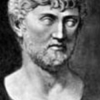
Lucretius
Titus Lucretius Caruswas a Roman poet and philosopher. His only known work is the epic philosophical poem De rerum natura about the tenets and philosophy of Epicureanism, and which is usually translated into English as On the Nature of Things...
NationalityRoman
ProfessionPoet
death past leaving
Why shed tears that you must die? For if your past life has been one of enjoyment, and if all your pleasures have not passed through your mind, as through a sieve, and vanished, leaving not a rack behind, why then do you not, like a thankful guest, rise cheerfully from life's feast, and with a quiet mind go take your rest.
men leaving darkness
The dreadful fear of hell is to be driven out, which disturbs the life of man and renders it miserable, overcasting all things with the blackness of darkness, and leaving no pure, unalloyed pleasure. [Lat., Et metus ille foras praeceps Acheruntis agundus, Funditis humanam qui vitam turbat ab imo, Omnia suffuscans mortis nigrore, neque ullam Esse voluptatem liquidam puramque relinquit.]
food man
What is food to one man is bitter poison to others.
bitter food
What is food to one is to another bitter poison.
stones doe heavy
If God can do anything he can make a stone so heavy that even he can't lift it. Then there is something God cannot do, he cannot lift the stone. Therefore God does not exist.
fortune morrow doubtful
It is doubtful what fortune to-morrow will bring. [Lat., Posteraque in dubio est fortunam quam vehat aetas.]
infinite endless everlasting
All things keep on in everlasting motion, Out of the infinite come the particles, Speeding above, below, in endless dance.
sea watches shore
Tis pleasant to stand on shore and watch others labouring in a stormy sea.
wind air should
Air, I should explain, becomes wind when it is agitated.
pain spring needs
... deprived of pain, and also deprived of danger, able to do what it wants, [Nature] does not need us, nor understands our deserts, and it cannot be angry.
return violence injury
Violence and injury enclose in their net all that do such things, and generally return upon him who began.
death sleep forgotten
Nay, the greatest wits and poets, too, cease to live; Homer, their prince, sleeps now in the same forgotten sleep as do the others. [Lat., Adde repertores doctrinarum atque leporum; Adde Heliconiadum comites; quorum unus Homerus Sceptra potitus, eadem aliis sopitu quiete est.]
rocks air atheism
Assuredly whatsoever things are fabled to exist in deep Acheron, these all exist in this life. There is no wretched Tantalus, fearing the great rock that hangs over him in the air and frozen with vain terror. Rather, it is in this life that fear of the gods oppresses mortals without cause, and the rock they fear is any that chance may bring.
flower vex bitterness
From the midst of the very fountain of pleasure, something of bitterness arises to vex us in the flower of enjoyment.