Ludwig Wittgenstein
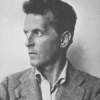
Ludwig Wittgenstein
Ludwig Josef Johann Wittgensteinwas an Austrian-British philosopher who worked primarily in logic, the philosophy of mathematics, the philosophy of mind, and the philosophy of language. From 1929 to 1947, Wittgenstein taught at the University of Cambridge. During his lifetime he published just one slim book, the 75-page Tractatus Logico-Philosophicus, one article, one book review and a children's dictionary. His voluminous manuscripts were edited and published posthumously. Philosophical Investigations appeared as a book in 1953, and has since come to be...
NationalityAustrian
ProfessionPhilosopher
Date of Birth26 April 1889
CityVienna, Austria
CountryAustria
Because our goals are not lofty but illusory, our problems are not difficult, but nonsensical.
Only when one thinks even much more madly than the philosophers can one solve their problems.
It's only by thinking even more crazily than philosophers do that you can solve their problems.
It is much easier to bury a problem than to solve it.
The solution to the problem of life is seen in the vanishing of this problem.
A philosophical problem has the form: I don't know my way about.
We feel that even if all possible scientific questions be answered, the problems of life have still not been touched at all.
The real question of life after death isn't whether or not it exists, but even if it does what problem this really solves.
Our civilization is characterized by the word ''progress.'' Progress is its form rather than making progress being one of its features. Typically it constructs. It is occupied with building an ever more complicated structure. And even clarity is sought only
Vanity of vanities, all is vanity.
The mystical is not how the world is, but that it is
A new word is like a fresh seed sewn on the ground of the discussion.
It seems to me that, in every culture, I come across a chapter headed ''Wisdom.'' And then I know exactly what is going to follow: ''Vanity of vanities, all is vanity.''
Kierkegaard was by far the most profound thinker of the last century. Kierkegaard was a saint.