Mahatma Gandhi
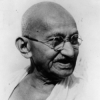
Mahatma Gandhi
Mohandas Karamchand Gandhi; 2 October 1869 – 30 January 1948) was the preeminent leader of the Indian independence movement in British-ruled India. Employing nonviolent civil disobedience, Gandhi led India to independence and inspired movements for civil rights and freedom across the world. The honorific Mahatma—applied to him first in 1914 in South Africa,—is now used worldwide. He is also called Bapuin India. In common parlance in India he is often called Gandhiji. He is unofficially called the Father of the Nation...
NationalityIndian
ProfessionCivil Rights Leader
Date of Birth2 October 1869
CityPortbandar, India
CountryIndia
Active nonviolence of the brave puts to flight thieves, dacoits, murderers, and prepares an army of volunteers ready to sacrifice themselves in quelling riots, in extinguishing fires and feuds, and so on.
The word 'defeat' is not to be found in my dictionary, and everyone who is selected as a recruit in my army may be certain that there is no defeat for a satyagrahi.
A country that is governed by its national army can never be morally free and, therefore, its so-called weakest member can never rise to his full moral height.
In a nonviolent army, the general and the officers are elected, or are as if elected, when their authority is moral and rests solely on the willing obedience of the rank and file.
Employers ganging up against workers is like raising an army of elephants against ants.
Spiritually, compulsory disarmament has made us unmanly, and the presence of an alien army of occupation, employed with deadly effect to crush in us the spirit of resistance, has made us think we cannot look after ourselves or put up a defense against foreign aggression, or even defend our homes and families...
Love has more force than a besieging army.
That atomic energy though harnessed by American scientists and army men for destructive purposes may be utilised by other scientists for humanitarian purposes is undoubtedly within the realm of possibility. ... An incendiary uses fire for his destructive and nefarious purpose, a housewife makes daily use of it in preparing nourishing food for mankind.
The builders of the British Indian Empire have patiently built its four pillars-the European interests, the army, the Indian princes and the communal divisions.
Remember that there is always a limit to self-indulgence, but none to self-restraint.
Remember that all through history the way of truth and love has always won. There have been tyrants and murderers and for a time they seem invincible but in the end, they always fall -- think of it, ALWAYS.
Justice will come when it is deserved by our being and feeling strong.
That action alone is just that does not harm either party to a dispute
There are limits to self-indulgence, none to restraint.