Mahatma Gandhi
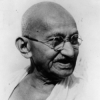
Mahatma Gandhi
Mohandas Karamchand Gandhi; 2 October 1869 – 30 January 1948) was the preeminent leader of the Indian independence movement in British-ruled India. Employing nonviolent civil disobedience, Gandhi led India to independence and inspired movements for civil rights and freedom across the world. The honorific Mahatma—applied to him first in 1914 in South Africa,—is now used worldwide. He is also called Bapuin India. In common parlance in India he is often called Gandhiji. He is unofficially called the Father of the Nation...
NationalityIndian
ProfessionCivil Rights Leader
Date of Birth2 October 1869
CityPortbandar, India
CountryIndia
I do not believe in telling people of one's faith, especially with a view to conversion. Faith must be lived, and when it is, it becomes self-propagating.
No police or military in the world can protect people who are cowards.
People engaged in a war do not lose temper over matters which affect the fortunes of war.
Civil disobedience is not only the natural right of a people, especially when they have no effective voice in their own Government, but that it is also a substitute for violence or armed rebellion.
We cannot have real independence unless the people banish the touch-me-not spirit from their hearts.
Swaraj of a people means the sum total of the Swaraj (self-rule) of individuals.
An awakened people who rely upon their nonviolent strength are independent in the face of any conceivable combination of the armed powers.
If what passed as nonviolence does not enable people to protect the honour of women, or if it does not enable women to protect their own honour, it is not nonviolence.
Active nonviolence is necessary for those who will offer civil disobedience but the will and proper training are enough for the people to co-operate with those who are chosen for civil disobedience.
If people knew the working of the law of truth and nonviolence, then they would themselves regulate the matter of its shortage.
Non-co-operators will make a serious mistake if they seek to convert people to their creed by violence.
The most practical, the most dignified way of going on in the world is to take people at their word, when you have no positive reason to the contrary.
A true life lived amongst the people is in itself an object-lesson that must produce its own effect upon immediate surroundings.
Through Khadi we teach the people the art of civil obedience to an institution which they have built up for themselves.