Philip Levine
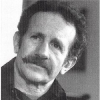
Philip Levine
Philip Levinewas a Pulitzer Prize-winning American poet best known for his poems about working-class Detroit. He taught for more than thirty years in the English department of California State University, Fresno and held teaching positions at other universities as well. He served on the Board of Chancellors of the Academy of American Poets from 2000 to 2006, and was appointed Poet Laureate of the United States for 2011–2012...
NationalityAmerican
ProfessionPoet
Date of Birth10 January 1928
CountryUnited States of America
Well, don't kid yourself, I got plenty of crummy poems that I think I might use.
When I started writing, I wanted to be a fiction writer. I wanted to be a novelist.
Let's say I live to be eighty - I'm seventy-one now - nothing I do between now and eighty is going to change the way people think about my poetry.
I've never known where I'm going until I've gone and come back, and then it takes me ages to see what the trip was about.
It would be nice to stumble onto one of those great projects so I could stay busy right through my dotage, but I'm not counting on it.
I'm saying look, here they come, pay attention. Let your eyes transform what appears ordinary, commonplace, into what it is, a moment in time, an observed fragment of eternity.
American poets have been criticized for anything you can think of. For being too English, recently for not being English enough.
In my twenties, before I learned how to write poems of work, I thought of myself as the person who would capture this world.
I don't know how much the music has influenced my writing; I know it's inspired me, and the young jazz musicians I went to school with in Detroit, Kenny Burrell, Pepper Adams, Bess Bonier, Tommy Flanagan, Barry Harris, were the first people I knew who were living the creative lives of artists.
You have begun to separate the dark from the dark.
My temperament is not geared to that of a novelist.
Now I think poetry will save nothing from oblivion, but I keep writing about the ordinary because for me it's the home of the extraordinary, the only home.
Listen to these young poets and you'll discover the voice of the present and hear the voice of the future before the future is even here.
If that voice that you created that is most alive in the poem isn't carried throughout the whole poem, then I destroy where it's not there, and I reconstruct it so that that voice is the dominant voice in the poem.