Robert Pinsky
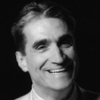
Robert Pinsky
Robert Pinskyis an American poet, essayist, literary critic, and translator. From 1997 to 2000, he served as Poet Laureate Consultant in Poetry to the Library of Congress. Pinsky is the author of nineteen books, most of which are collections of his poetry. His published work also includes critically acclaimed translations, including The Inferno of Dante Alighieri and The Separate Notebooks by Czesław Miłosz. He teaches at Boston University...
NationalityAmerican
ProfessionPoet
Date of Birth20 October 1940
CityLong Branch, NJ
CountryUnited States of America
Poetry is not easy. Or should I say, real poetry is not easy.
When I was a teenager, just about the only thing I could do right was play music. In my graduating class, I was certainly not voted 'Most Literary Boy.' I can assure you I was not voted 'Mostly Likely to Succeed.' I was voted 'Most Musical Boy.' And the music led to the poetry.
The test of whether it's poetry is: does it sound beautiful when you say the words over, in your mind or your voice, with no skilled performer, no music, just the sounds and meanings in the words themselves,
I don't like to have a calm, orderly, quiet place to work. I often compose while driving, compose in my head. It is true that I wrote my little book, 'The Sounds of Poetry, A Brief Guide,' almost entirely in airplanes and airport departure lounges.
The best argument for teaching poetry is to put a three-year-old or a four-year-old and read Dr. Seuss, or Robert Louis Stevenson, and to feel how the child and you are engaging in something that's really basic to the animal, which is passing on in these rhythmic ways, something that came from somewhere.
For an American, there's no automatic place where people love the art of poetry. There's not a social class that considers poetry its property the way in some countries there's a snob value to the art.
For a lot of people, well-meaning teaching has made poetry seem arcane, difficult, a kind of brown-knotting medicine that might be good for you but doesn't taste so good. So I tried to make a collection of poetry that would be fun. And that would bring out poetry as an art, rather than the challenge to say smart things.
Jazz and poetry both involve a structure that may be familiar and to some extent predictable. And then, you try to create as much surprise and spontaneity and feeling and variation while respecting that structure.
Poetry is the most bodily of the arts.
Poetry is a vocal art for me - but not necessarily a performative one. It might be reading to oneself or recalling some lines by memory.
I think art is not an ornament or refinement at the fringes of human intelligence, I think it's at the center. It's at the core.
Method involves a slavish addiction to laws, and we can only aspire to anarchy.
To me, writing is a matter of voice. I think like that. The expression I sometimes use to myself is 'actual song.' That what I do is somewhere on the line between speaking to you as I am now and actual song. And the things I love when I say one of those poems to myself - it's a little bit like singing, it's a little bit like speaking.
I am a frustrated saxophone player. If I could, I would abandon all of my books, and I would trade it all if I could play the way people I admire play.