Rudolf Arnheim
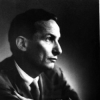
Rudolf Arnheim
Rudolf Arnheimwas a German-born author, art and film theorist, and perceptual psychologist. He learned Gestalt psychology from studying under Max Wertheimer and Wolfgang Köhler at the University of Berlin and applied it to art. His magnum opus was his book Art and Visual Perception: A Psychology of the Creative Eye. Other major books by Arnheim have included Visual Thinking, and The Power of the Center: A Study of Composition in the Visual Arts. Art and Visual Perception was revised, enlarged...
NationalityGerman
ProfessionArtist
Date of Birth15 July 1904
CountryGermany
No longer can we consider what the artist does to be a self-contained activity, mysteriously inspired from above, unrelated and unrelatable to other human activities. Instead, we recognize the exalted kind of seeing that leads to the creation of great art as an outgrowth of the humbler and more common activity of the eyes in everyday life. Just as the prosaic search for information is "artistic" because it involves giving and finding shape and meaning, so the artist's conceiving is an instrument of life, a refined way of understanding who and where we are.
The least touchable object in the world is the eye.
From building a fire one can learn something about artistic composition. If you use only small kindling and large logs, the fire will quickly eat up the small pieces but will not become strong enough to attack the large ones. You must supply a scale of sizes from the smallest to the largest. The human eye also will not make its way into a painting or building unless a continuum of shapes leads from the small to the large, from the large to the small.
Nothing is more humbling than to look with a strong magnifying glass at an insect so tiny that the naked eye sees only the barest speck and to discover that nevertheless it is sculpted and articulated and striped with the same care and imagination...
The absurd consequences of neglecting structure but using the concept of order just the same are evident if one examines the present terminology of information theory.
Furthermore, order is a necessary condition for making a structure function. A physical mechanism, be it a team of laborers, the body of an animal, or a machine, can work only if it is in physical order.
Man's striving for order, of which art is but one manifestation, derives from a similar universal tendency throughout the organic world; it is also paralleled by, and perhaps derived from, the striving towards the state of simplest structure in physical systems.
Today we no longer regard the universe as the cause of our own undeserved troubles but perhaps, on the contrary, as the last refuge from the mismanagement of our earthly affairs.
Since mechanically obtained randomness contains all kinds of possible permutations, including the most regular ones, it cannot be relied upon always to exhibit a pervasive irregularity.
A good documentary or educational film is not raw experience. The material has passed the mill of reason, it has been sifted and interpreted.
The experienced physician, mechanic, or physiologist looking at a wound, an engine, a microscopic preparation, "sees" things the novice does not see. If both, experts and laymen, were asked to make exact copies of what they see, their drawings would be quite different.
Television is a new, hard test of our wisdom. If we succeed in mastering the new medium it will enrich us. But it can also put our mind to sleep. We must not forget that in the past the inability to transport immediate experience and to convey it to others made the use of language necessary and thus compelled the human mind to develop concepts. For in order to describe things one must draw the general from the specific; one must select, compare, think. When communication can be achieved by pointing with the finger, however, the mouth grows silent, the writing hand stops, and the mind shrinks.
Order is a prerequisite of survival; therefore the impulse to produce orderly arrangements is inbred by evolution.
The clarification of visual forms and their organization in integrated patterns as well as the attribution of such forms to suitable objects is one of the most effective training grounds of the young mind.