Siri Hustvedt
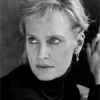
Siri Hustvedt
Siri Hustvedtis an American novelist and essayist. Hustvedt is the author of a book of poetry, six novels, two books of essays, and several works of non-fiction. Her books include: The Blindfold, The Enchantment of Lily Dahl, What I Loved, for which she is best known, A Plea for Eros, The Sorrows of an American, The Shaking Woman or A History of My Nerves, The Summer Without Men, Living, Thinking, Looking, and The Blazing World. What I Loved and The...
NationalityAmerican
ProfessionNovelist
Date of Birth19 February 1955
CityNorthfield, MN
CountryUnited States of America
There is a difference between using a made-up name and using real people as pseudonyms. People are not costumes you can wear. They are flesh and blood.
I saw Joseph Cornell's lyrical work for the first time at the Museum of Modern Art in the late seventies and have internalized many of his boxes.
My parents were gigantic influences on me. I had a deep hunger to impress my father, who was a professor and an intellectual. I wanted his approval.
With almost no exceptions, art by men is much more expensive than art by women. Even great women artists, like Louise Bourgeois and Lee Krasner, are only fully embraced very late in their career.
Writing isn't a job so much as a compulsion. I've been writing since I was very young because for some strange reason, I must write, and also because when I write, I feel more alive and closer to the world than when I'm not writing.
The English expression 'to fall asleep' is apt because the transition between waking and sleeping is a gradual drop from one state of being into another: a giving up of full self-consciousness for unconsciousness or for the altered consciousness of dreams.
The relationship between the imagined and the real is more complicated than people imagine.
It's not as if I've been unlucky. My books have been published and reviewed. I haven't lived through terrible literary suffering!
Although sometimes the morbid is also the transcendent, the transcendent cannot be reduced to the morbid.
While reading 'David Copperfield' in the middle of the night - probably because of the light, I had insomnia for the first time - I looked out of the window and thought, 'If this is what books can do, this is what I want to do.'
When I taught writing classes to psychiatric patients, I met people whose stories of manic highs and immobilizing lows appeared to be textbook descriptions of classic bipolar disorder. I met other patients who had been diagnosed with myriad disorders. No doctor seemed to agree about what they actually suffered from.
American mass media culture, with its celebrities, shopping hysteria, sound bites, formulaic plots, received ideas, and nauseating repetitions, depresses me.
I was 13 when I had my first bout of insomnia. My family was in Reykjavik, Iceland, for the summer, and day never really became night.
Children are not in a position to assess risk and safety; it must be done for them, and it must be done carefully.