Thabo Mbeki
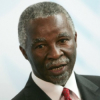
Thabo Mbeki
Thabo Mvuyelwa Mbekiis a South African politician who served nine years as the second post-apartheid President of South Africa from 14 June 1999 to 24 September 2008. On 20 September 2008, with about nine months left in his second term, Mbeki announced his resignation after being recalled by the National Executive Committee of the ANC, following a conclusion by judge C. R. Nicholson of improper interference in the National Prosecuting Authority, including the prosecution of Jacob Zuma for corruption. On...
NationalitySouth African
ProfessionPolitician
Date of Birth18 June 1942
I am sure it is in the medical textbooks, there are many things that cause immune deficiency and you will find therefore in the South African HIV and AIDS programme, that it will say that part of what we have got to do is to make sure that our health infrastructure, our health system is able to deal adequately with all of the illnesses that are a consequence of AIDS.
If you read a textbook it will tell you, these are the things, for instance, on the African continent that would contribute to immune deficiency: the various tropical diseases, which because of poor health infrastructure, poor nutrition, general levels of poverty, don't get treated; syphilis, untreated or not properly treated (which as I hear is a big problem, when it is treated and the symptoms disappear, but, in fact, it is not cured and incubates there) that will impact on the immune system. So you have got to deal with these things.
You and your administration have treated us with dignity, whatever our differences on specific matters, with sensitivity to our problems in an unwavering commitment to help us resolve these,
We will act together to build a South Africa that truly belongs to all who live in it, both black and white.
Well, because lots of questions had been raised about the toxicity of the drug, which is very serious.
It wouldn't sit easily on one's conscience that you had been warned and there could be danger, but nevertheless you went ahead and said let's dispense these drugs.
I say that why don't we bring all points of view. Sit around a table and discuss this evidence, and produce evidence as it may be, and let's see what the outcome is, which is why we are having this International panel which we are all talking about.
We've had a long wrangle with the pharmaceutical industry about parallel imports, and what we were saying is we want to make medicines and drugs as affordable as a possible to what is largely a poor population.
Together we have travelled a long road to be where we are today. This has been a road of struggle against colonial and apartheid oppression.
We are convinced that the risen masses must stand at the heart and in the vanguard of the great historic process to eradicate the legacy of slavery, colonialism, apartheid and neo-colonialism.
What all of us have said on the continent is the actual African experience over the last 40 years shows that where you don't have democracy, where you've got military governments, where you've got civil conflict, where you've got no observation of the rule of law, then all of these things need to be addressed as a basis for development.
China will emerge as one of the principal partners of South Africa...and we agreed that given the scope and depth of relations that will develop, we will establish a joint commission to incorporate all of these elements,
The government continues to function properly and we continue to work as government,
We want a peaceful resolution. We would not want to see any kind of war in the Middle East because it would be disastrous for Africa.