W. Eugene Smith
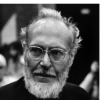
W. Eugene Smith
William Eugene Smith, was an American photojournalist, renowned for the dedication he devoted to his projects and his uncompromising professional and ethical standards. Smith developed the photo essay into a sophisticated visual form. His most famous studies included brutally vivid World War II photographs, the clinic of Dr Schweitzer in French Equatorial Africa, the city of Pittsburgh, the dedication of an American country doctor and a nurse midwife, and the pollution which damaged the health of the residents of Minamata...
NationalityAmerican
ProfessionPhotographer
Date of Birth30 December 1918
CountryUnited States of America
I would that my photographs might be, not the coverage of a news event, but an indictment of war.
I was after a set of pictures, so that when people looked at them they would say, ‘This is war’-that the people who were in the war would believe that I had truthfully captured what they had gone through I worked in the framework that war is horrible. I want to carry on what I have tried to do in these pictures. War is a concentrated unit in the world and these things are clearly and cleanly seen. Things like race prejudice, poverty, hatred and bigotry are sprawling things in civilian life, and not so easy to define as war.
With considerable soul searching, that to the utmost of my ability, I have let truth be the prejudice.
My pictures are complex and so am I. When I am almost symbolistic in writing, there is a more limiting difference’s of accepting, while I can be even more complex in the photographs and people can usually accept them within the framework of their own limitations or lack of limitations – there is no dictionary meaning… they can look up for the photographic image and allow it to confuse them.
An artist must be ruthlessly selfish.
Negatives are the notebooks, the jottings, the false starts, the whims, the poor drafts, and the good draft but never the completed version of the work The print and a proper one is the only completed photograph, whether it is specifically shaded for reproduction, or for a museum wall.
I think photojournalism is documentary photography with a purpose.
My pictures are complex and so am I.
What use having a great depth of field, if there is not an adequate depth of feeling?
The photographer must bear the responsibility for his work and its effect …[for] photographic journalism, because of its tremendous audience reached by publications using it, has more influence on public thinking than any other branch of photography.
Most photographers seem to operate with a pane of glass between themselves and their subjects. They just can't get inside and know the subject.
I am an idealist. I often feel I would like to be an artist in an ivory tower. Yet it is imperative that I speak to people, so I must desert that ivory tower. To do this, I am a journalist—a photojournalist. But I am always torn between the attitude of the journalist, who is a recorder of facts, and the artist, who is often necessarily at odds with the facts. My principle concern is for honesty, above all honesty with myself…
Up to and including the moment of exposure, the photographer is working in an undeniably subjective way. By his choice of technical approach, by the selection of the subject matterand by his decision as to the exact cinematic instant of exposure, he is blending the variables of interpretation into an emotional whole.
... to became neighbours and friends instead of journalists. This is the way to make your finest photographs.