Yukio Mishima
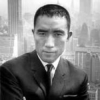
Yukio Mishima
Yukio Mishimais the pen name of Kimitake Hiraoka, a Japanese author, poet, playwright, actor, and film director. Mishima is considered one of the most important Japanese authors of the 20th century. He was considered for the Nobel Prize in Literature in 1968 but the award went to his countryman Yasunari Kawabata. His works include the novels Confessions of a Mask and The Temple of the Golden Pavilion, and the autobiographical essay Sun and Steel. His avant-garde work displayed a blending...
NationalityJapanese
ProfessionPlaywright
Date of Birth14 January 1925
CountryJapan
For clearly it is impossible to touch eternity with one hand and life with the other.
His conviction of having no purpose in life other than to act as a distillation of poison was part of the ego of an eighteen-year-old. He had resolved that his beautiful white hands would never be soiled or calloused. He wanted to be like a pennant, dependent on each gusting wind. The only thing that seemed valid to him was to live for the emotions--gratuitous and unstable, dying only to quicken again, dwindling and flaring without direction or purpose.
Beauty is something that burns the hand when you touch it.
Just let matters slide. How much better to accept each sweet drop of the honey that was Time, than to stoop to the vulgarity latent in every decision. However grave the matter at hand might be, if one neglected it for long enough, the act of neglect itself would begin to affect the situation, and someone else would emerge as an ally. Such was Count Ayakura's version of political theory.
We had stretched out our arms to each other and supported something in our joined hands, but this thing we were holding was like a sort of gas that exists when you believe in its existence and disappears when you doubt. The task of supporting it seems simple at first glance, but actually requires an ultimate refinement of calculation and a consummate skill.
We are not wounded so deeply when betrayed by the things we hope for as when betrayed by things we try our best to despise. In such betrayal comes the dagger in the back.
As usual, it occurred to me that words were the only thing that could possibly save me from this situation. This was a characteristic misunderstanding on my part. When action was needed, I was absorbed in words; for words proceeded with such difficulty from my mouth that I was intent on them and forgot all about action. It seemed to me that actions, which are dazzling, varied things, must always be accompanied by equally dazzling and equally varied words.
I had long since insisted upon interpreting the things that Fate forced me to do as victories of my own will and intelligence, and now this bad habit had grown into a sort of frenzied arrogance. In the nature of what I was calling my intelligence there was a touch of something illegitimate, a touch of the sham pretender who has been placed on the throne by some freak chance. This dolt of a usurper could not foresee the revenge that would inevitably be wreaked upon his stupid despotism.
Let us remember that the central reality must be sought in the writer's work: it is what the writer chose to write, or was compelled to write, that finally matters. And certainly Mishima's carefully premeditated death is part of his work.
His emotion evident in the glitter of his eyes.
It is a common failing of childhood to think that if one makes a hero out of a demon the demon will be satisfied.
He was in a room of the Gesshuuji, which he had thought it would be impossible to visit. The approach of death had made the visit easy, had unloosed the weight that held him in the depths of being. It was even a comfort to think, from the light repose the struggle up the hill had brought him, that Kiyoaki, struggling against illness up that same road, had been given wings to soar with by the denial that awaited him.
At no time are we ever in such complete possession of a journey, down to its last nook and cranny, as when we are busy with preparations for it. After that, there remains only the journey itself, which is nothing but the process through which we lose our ownership of it.
According to Eshin's Essentials of Salvation, the Ten Pleasures are but a drop in the ocean when compared to the joys of the Pure Land.