A. E. Housman
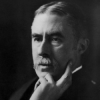
A. E. Housman
Alfred Edward Housman, usually known as A. E. Housman, was an English classical scholar and poet, best known to the general public for his cycle of poems A Shropshire Lad. Lyrical and almost epigrammatic in form, the poems wistfully evoke the dooms and disappointments of youth in the English countryside. Their beauty, simplicity and distinctive imagery appealed strongly to late Victorian and Edwardian taste, and to many early 20th-century English composers both before and after the First World War. Through...
NationalityEnglish
ProfessionPoet
Date of Birth26 March 1859
A. E. Housman quotes about
Little is the luck I've had, And oh, 'tis comfort small - To think that many another lad - Has had no luck at all
Perfect understanding will sometimes almost extinguish pleasure.
Good religious poetry... is likely to be most justly appreciated and most discriminately relished by the undevout.
With rue my heart is laden For golden friends I had, For many a rose-lipped maiden And many a lightfoot lad.
And how am I to face the odds Of man's bedevilment and God's? I, a stranger and afraid In a world I never made.
White in the moon the long road lies, The moon stands blank above; White in the moon the long road lies That leads me from my love. Still hangs the hedge without a gust, Still, still the shadows stay: My feet upon the moonlit dust Pursue the ceaseless way. The world is round, so travellers tell, And straight through reach the track, Trudge on, trudge on, 'twill all be well, The way will guide one back. But ere the circle homeward hies Far, far must it remove: White in the moon the long road lies That leads me from my love.
Ten thousand times I've done my best and all's to do again.
I do not choose the right word, I get rid of the wrong one.
There, by the starlit fences The wanderer halts and hears My soul that lingers sighing About the glimmering weirs.
The average man, if he meddles with criticism at all, is a conservative critic.
Great literature should do some good to the reader: must quicken his perception though dull, and sharpen his discrimination though blunt, and mellow the rawness of his personal opinions.
Life, to be sure, is nothing much to lose, But young men think it is, and we were young.
Housman is one of my heroes and always has been. He was a detestable and miserable man. Arrogant, unspeakably lonely, cruel, and so on, but and absolutely marvellous minor poet, I think, and a great scholar.
Three minutes thought would suffice to find this out; but thought is irksome and three minutes is a long time.