Albert Camus
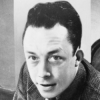
Albert Camus
Albert Camus; 7 November 1913 – 4 January 1960) was a French philosopher, author, and journalist. His views contributed to the rise of the philosophy known as absurdism. He wrote in his essay The Rebel that his whole life was devoted to opposing the philosophy of nihilism while still delving deeply into individual freedom. He won the Nobel Prize in Literature in 1957...
NationalityFrench
ProfessionNovelist
Date of Birth7 November 1913
CountryFrance
giving-up believe men
Believe me, the hardest thing for a man to give up is that which he really doesn't want, after all.
love desire possession
The desire for possession is insatiable, to such a point that it can survive even love itself. To love, therefore, is to sterilize the person one loves.
cease
The day when I am no more than a writer I shall cease to be a writer.
way done wells
I had been right I was still right I was always right. I had lived my life one way and I could just as well lived it another. I had done this and I hadn t done that. I hadn t done this thing and I had done another. And so?
men feelings mind
The mind's deepest desire, even in its most elaborate operations, parallels man's unconscious feeling in the face of his universe: it is an insistence upon familiarity, an appetite for clarity.
men together links
The absurd depends as much on man as on the world. For the moment, it is all that links them together.
happiness heart firsts
For the first time, the first, I laid my heart open to the benign indifference of the universe. To feel it so like myself, indeed so brotherly, made me realize that I'd been happy, and that I was happy still.
suicide philosophy suicidal
Judging whether life is or is not worth living amounts to answering the fundamental question of philosophy.
ideas fundamentals firsts
L'absurde est la notion essentielle et la premie' re ve? rite? . The absurd is the fundamental idea and the first truth.
world absurd refuge
The world in which we were called to exist was an absurd world, and there was no other in which we could take refuge.
dream children errors
In our wildest aberrations we dream of an equilibrium we have left behind and which we naively expect to find at the end of our errors. Childish presumption which justifies the fact that child-nations, inheriting our follies, are now directing our history.
solitude violence working-conditions
Working conditions for me have always been those of the monastic life: solitude and frugality. Except for frugality, they are contrary to my nature, so much so that work is a violence I do to myself.
violence
Violence is both unavoidable and unjustifiable.
believe differences historical
To correct a natural indifference I was placed half-way between misery and the sun. Misery kept me from believing that all was well under the sun, and the sun taught me that history wasn't everything.