Albert Camus
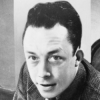
Albert Camus
Albert Camus; 7 November 1913 – 4 January 1960) was a French philosopher, author, and journalist. His views contributed to the rise of the philosophy known as absurdism. He wrote in his essay The Rebel that his whole life was devoted to opposing the philosophy of nihilism while still delving deeply into individual freedom. He won the Nobel Prize in Literature in 1957...
NationalityFrench
ProfessionNovelist
Date of Birth7 November 1913
CountryFrance
winning play
the one who doesnt play, doesnt win anything, but he actually looses somehting, {playing}
integrity people needs
There can be no question of holding forth on ethics. I have seen people behave badly with great morality and I note every day that integrity has no need of rules
work
Whatever prevents you from doing your work has become your work.
sun dry pool
How do you put everyone in the pool, so you have the right to dry yourself in the sun?
effort code-of-ethics faces
No code of ethics and no effort are justifiable a priori in the face of the cruel mathematics that command our condition.
lying believe men
Great ideas, it has been said, come into the world as gently as doves. Perhaps then, if we listen attentively, we shall hear amid the uproar of empires and nations, a faint flutter of wings, the gentle stirring of life and hope. Some will say that this hope lies in a nation; others in a man. I believe rather that it is awakened, revived, nourished, by millions of solitary individuals whose and works every day negate frontiers and the crudest implications of history.
wanted humans human-beings
And then came human beings; humans wanted to cling but there was nothing to cling to.
suicide philosophy philosophical
There is but one truly serious philosophical problem and that is suicide. Judging whether life is or is not worth living amounts to answering the fundamental question of philosophy. All the rest — whether or not the world has three dimensions, whether the mind has nine or twelve categories — comes afterwards. These are games; one must first answer.
drama tragedy spain
It was in Spain that [my generation] learned that one can be right and yet be beaten, that force can vanquish spirit, that there are times when courage is not its own recompense. It is this, doubtless, which explains why so many, the world over, feel the Spanish drama as a personal tragedy.
would-be granted virtue
His own faith, however, was not lacking in virtues since it consisted in acknowledging obscurely that he would be granted much without ever deserving anything.
regret significant myth-of-sisyphus
If the only significant history of human thought were to be written, it would have to be the history of its successive regrets and its impotences.
death believe men
Men are never really willing to die except for the sake of freedom: therefore they do not believe in dying completely.
men independence craving
A craving for freedom and independence is generated only in a man still living on hope.
people normal loved-ones
At one time or another all normal people have wished their loved ones were dead.