Albert Claude
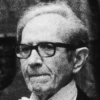
Albert Claude
Albert Claudewas a Belgian medical doctor and cell biologist who shared the Nobel Prize in Physiology or Medicine in 1974 with Christian de Duve and George Emil Palade. His elementary education started in a comprehensive primary school at Longlier, his birthplace. He served in the British Intelligence Service during the First World War, and got imprisoned in concentration camps twice. In recognition of his service, he was granted enrolment at the University of Liège in Belgium to study medicine without...
NationalityBelgian
ProfessionScientist
Date of Birth24 August 1899
CountryBelgium
Once Ptolemy and Plato, yesterday Newton, today Einstein, and tomorrow new faiths, new beliefs, and new dimensions.
As far as I remember, even younger than eight, I have always been guided by reason. Not cold reason, but that which leads to the truth, to the real, and to sane Justice.
Man, like other organisms, is so perfectly coordinated that he may easily forget, whether awake or asleep, that he is a colony of cells in action, and that it is the cells which achieve, through him, what he has the illusion of accomplishing himself.
For the resolving powers of our scientific instruments decide, at a given moment, of the size and the vision of our Universe, and of the image we then make of ourselves.
This familiarity with a respected physician and my appreciation of his work, or the tragedy I experienced with the long, tormented agony and death of my mother might have influenced me in wanting to study medicine. It was not the case.
No doubt, man will continue to weigh and to measure, watch himself grow, and his Universe around him and with him, according to the ever growing powers of his tools.
If we examine the accomplishments of man in his most advanced endeavors, in theory and in practice, we find that the cell has done all this long before him, with greater resourcefulness and much greater efficiency.
For this equilibrium now in sight, let us trust that mankind, as it has occurred in the greatest periods of its past, will find for itself a new code of ethics, common to all, made of tolerance, of courage, and of faith in the Spirit of men.
The cell, over the billions of years of her life, has covered the earth many times with her substance, found ways to control herself and her environment, and insure her survival.
For over two billion years, through the apparent fancy of her endless differentiations and metamorphosis the Cell, as regards its basic physiological mechanisms, has remained one and the same. It is life itself, and our true and distant ancestor.
Life, this anti-entropy, ceaselessly reloaded with energy, is a climbing force, toward order amidst chaos, toward light, among the darkness of the indefinite, toward the mystic dream of Love, between the fire which devours itself and the silence of the Cold.