Alexander Hamilton
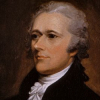
Alexander Hamilton
Alexander Hamiltonwas a Founding Father of the United States, chief staff aide to General George Washington, one of the most influential interpreters and promoters of the U.S. Constitution, the founder of the nation's financial system, the founder of the Federalist Party, the world's first voter-based political party, the founder of the United States Coast Guard, and the founder of The New York Post newspaper. As the first Secretary of the Treasury, Hamilton was the primary author of the economic policies...
NationalityAmerican
ProfessionPolitician
Date of Birth11 January 1757
CountryUnited States of America
But the greatest obstacle of all to the successful prosecution of a new branch of industry in a country, in which it was before unknown, consists . . . in the bounties, premiums, and other aids which are granted, in a variety of cases, by the nations, in which the establishments to be imitated are previously introduced.
There is at this present juncture, a certain fermentation of mind, a certain activity of speculation and enterprise which if properly directed may be made subservient to useful purposes; but which if left entirely to itself, may be attended with pernicious effects.
The superiority...enjoyed by nations that have...perfected a branch of industry, constitutes a...formidable obstacle.
The powers contained in a constitution...ought to be construed liberally in advancement of the public good.
The principal purposes to be answered by union are these the common defense of the members; the preservation of the public peace as well against internal convulsions as external attacks; the regulation of commerce with other nations and between the States; the superintendence of our intercourse, political and commercial, with foreign countries.
The increasing remoteness of consanguinity is everyday diminishing the force of the family compact between France and Spain. And politicians have ever with great reason considered the ties of blood as feeble and precarious links of political connection.
If, then, the courts of justice are to be considered as the bulwarks of a limited Constitution against legislative encroachments, this consideration will afford a strong argument for the permanent tenure of judicial offices, since nothing will contribute so much as this to that independent spirit in the judges which must be essential to the faithful performance of so arduous a duty.
But might not his [the president's] nomination be overruled? I grant it might, yet this could only be to make place for another nomination by himself. The person ultimately appointed must be object of his preference, though perhaps not in the first degree. It is also not very probable that his nomination would often be overruled.
The reasonableness of the agency of the national courts in cases in which the state tribunals cannot be supposed to be impartial, speaks for itself. No man ought certainly to be a judge in his own cause, or in any cause in respect to which he has the least interest or bias.
And it proves, in the last place, that liberty can have nothing to fear from the judiciary alone, but would have everything to fear from its union with either of the other departments.
Safety from external danger is the most powerful director of national conduct. To be more safe, [nations] at length become willing to run the risk of being less free.
Remember civil and religious liberty always go together: if the foundation of the one be sapped, the other will fall of course.
[T]he Constitution ought to be the standard of construction for the laws, and that wherever there is an evident opposition, the laws ought to give place to the Constitution. But this doctrine is not deducible from any circumstance peculiar to the plan of convention, but from the general theory of a limited Constitution.
If it be said that the legislative body are themselves the constitutional judges of their own powers, and that the construction they put upon them is conclusive upon the other departments, it may be answered, that this cannot be the natural presumption, where it is not be collected from any particular provisions in the Constitution.