Alexander Herzen
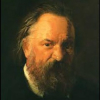
Alexander Herzen
Aleksandr Ivanovich Herzenwas a Russian writer and thinker known as the "father of Russian socialism" and one of the main fathers of agrarian populism. He is held responsible for creating a political climate leading to the emancipation of the serfs in 1861. His autobiography My Past and Thoughts, written with grace, energy, and ease, is often considered the best specimen of that genre in Russian literature. He also published the important social novel Who is to Blame?...
NationalityRussian
ProfessionJournalist
Date of Birth6 April 1812
CountryRussian Federation
I am truly horrified by modern man. Such absence of feeling, such narrowness of outlook, such lack of passion and information, such feebleness of thought.
The Death of the contemporary forms of social order ought to gladden rather than trouble the soul. Yet what is frightening is that the departing world leaves behind it not an heir, but a pregnant widow. Between the death of the one and the birth of the other, much water will flow by, a long night of chaos and desolation will pass.
The liberty of the individual is the greatest thing of all, it is on this and this alone that the true will of the people can develop.
Life has taught me to think, but thinking has not taught me to live.
Liberalism, austere in political trifles, has learned ever more artfully to unite a constant protest against the government with a constant submission to it.
The world will not know liberty until all that is religious and political is transformed into something simple and human and made susceptible to criticism and denial.
Science, which cuts its way through the muddy pond of daily life without mingling with it, casts its wealth to right and left, but the puny boatmen do not know how to fish for it.
There is nothing in the world more stubborn than a corpse: you can hit it, you can knock it to pieces, but you cannot convince it.
I have served one idea, marched under one banner - war against all imposed authority - against every kind of deprivation of freedom, in the name of the absolute independence of the individual.
To build a city where it is impossible to build a city is madness in itself, but to build there one of the most elegant and grandest of cities is the madness of genius.
Science even more than the Gospel teaches us humility. She cannot look down on anything, she does not know what superiority means, she despises nothing, never lies for the sake of a pose, and conceals nothing out of coquetry. She stops before the facts as an investigator, sometimes as a physician, never as an executioner, and still less with hostility and irony.
History is the autobiography of a madman.
What breadth, what beauty and power of human nature and development there must be in a woman to get over all the palisades, all the fences, within which she is held captive!
If nations always moved from one set of furnished rooms to another - and always into a better set - things might be easier, but the trouble is that there is no one to prepare the new rooms. The future is worse than the ocean - there is nothing there.