Alexander Lowen
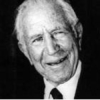
Alexander Lowen
Alexander Lowenwas an American physician and psychotherapist. A student of Wilhelm Reich in the 1940s and early 1950s in New York, he developed bioenergetic analysis, a form of mind-body psychotherapy, with his then-colleague, John Pierrakos. He is also noted for developing the concept of bioenergetic grounding, one of the foundational principles of bioenergetic therapy. Lowen was the founder and former executive director of the International Institute for Bioenergetic Analysis in New York City. The IIBA now has over 1500 members...
NationalityAmerican
ProfessionPsychologist
Date of Birth23 December 1910
CountryUnited States of America
No one is exempt from the rule that learning occurs through recognition of error.
We believe it is bad or dangerous to be carried away by our emotions. We admire the person who is cool, who acts without feeling.
Not to fear a person with power--to profess, instead, one's love--is to deny that that person has power.
Power seems to confer on its possessor a mantle of superiority, specialness, and sexual potency, which the envious person desperately wants because he feels himself on some level to be inferior, unimportant, and impotent.
The single factor most responsible for the disruption of the family is the automobile. Its full effect cannot be assessed. Modern life, as we know, would be impossible without the ubiquitous motorcar. It broke up the old family and community.
The only way you can make a marriage work is as free, independent people. It needs to be based on the good feelings that you have for each other, not on need.
The repression of the memory is dependent upon and related to the suppression of feeling, for as long as the feeling persists, the memory remains vivid.
The ego exists as a powerful force in Western man that cannot be dismissed or denied. The therapeutic goal is to integrate the ego with the body and its striving for pleasure and sexual fulfilment.
The person senses what it feels like to be free from inhibitions. At the same time he feels connected and integrated – with his body and, through his body, with his environment. He has a sense of well-being and inner peace. He gains the knowledge that the life of the body resides in its involuntary aspect. […] Unfortunately these beautiful feelings do not always hold up under the stress of daily living in our modern culture. The pace, the pressure and the philosophy of our times are antithetical to life.
A person does not choose his or her fate; he or she only fulfills it. We are bound by our fate as long as we accept the values that determine it.
I would describe a hero as a person who has no fear of life, who can face life squarely.
In my opinion the hectic and almost frantic pace of modern living is a clear sign of the fear we have of being and of life. And as long as this fear exists in a person's unconscious, he will run faster and do more so as not to feel his fear.
The path to joy leads through despair.
A person with faith does not question its roots, for he knows that if he subjected it to the critical examination of his intellect, he would end up without faith. The same thing can be said of any feeling. You can analyze any feeling to death, but when you do that, you end up without feeling and without a meaninful life.