Alfred Korzybski
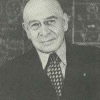
Alfred Korzybski
Alfred Habdank Skarbek Korzybskiwas a Polish-American independent scholar who developed a field called general semantics, which he viewed as both distinct from, and more encompassing than, the field of semantics. He argued that human knowledge of the world is limited both by the human nervous system and the languages humans have developed, and thus no one can have direct access to reality, given that the most we can know is that which is filtered through the brain's responses to reality...
NationalityPolish
ProfessionPhilosopher
Date of Birth3 July 1879
CountryPoland
Any object of thought is both 'more than what we think, and different'.
I think therefore I seem to be.
If all people learned to think in the non Aristotelian manner of quantum mechanics, the world would change so radically that most of what we call "stupidity" and even a great deal of what we consider "insanity" might disappear, and the "intractable" problems of war, poverty and injustice would suddenly seem a great deal closer to solution.
The affairs of man are conducted by our own, man-made rules and according to man-made theories. Man's achievements rest upon the use of symbols.... we must consider ourselves as a symbolic, semantic class of life, and those who rule the symbols, rule us.
the analogy between the noises we make when these noises do not symbolize anything which exists, and the worthless checks we write when our bank balance is zero
Whatever you may say something is, it is not!
Whatever you say about something, it is not.
The present non-aristotelian system is based on fundamental negative premises; namely, the complete denial of 'identity.'
It is now no mystery that some quite influential 'philosophers' were 'mentally' ill.
He who learns and learns and yet does not know what he knows, is one who plows and plows yet never sows.
Psycho-galvonic experiments show clearly that every emotion or thought is always connected with some electrical current.
Whatever you say it is, is simply what YOU SAY it is.
Every language having a structure, by the very nature of language, reflects in its own structure that of the world as assumed by those who evolved the language. In other words, we read unconsciously into the world the structure of the language we use.
Mathematics and logic have been proved to be one; a fact from which it seems to follow that mathematics may successfully deal with non-quantitative problems in a much broader sense than was suspected to be possible.