Alice Morse Earle
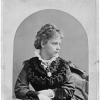
Alice Morse Earle
Alice Morse Earlewas an American historian and author from Worcester, Massachusetts. She was christened Mary Alice by her parents Edwin Morse and Abby Mason Clary. On 15 April 1874, she married Henry Earle of New York, changing her name from Mary Alice Morse to Alice Morse Earle. Her writings, beginning in 1890, focussed on small sociological details rather than grand details, and thus are invaluable for modern social historians. She wrote a number of books on colonial Americasuch as Curious...
NationalityAmerican
ProfessionHistorian
Date of Birth27 April 1851
CountryUnited States of America
We should have scant notion of the gardens of these New England colonists in the seventeenth century were it not for a cheerful traveller named John Josselyn, a man of everyday tastes and much inquisitiveness, and the pleasing literary style which comes from directness, and an absence of self-consciousness.
It is easy to gain a definite notion of the furnishing of colonial houses from a contemporary and reliable source - the inventories of the estates of the colonists.
Sunken gardens should be laid out under the supervision of an intelligent landscape architect; and even then should have a reason for being sunken other than a whim or increase in costliness.
In the early New England meeting-houses the seats were long, narrow, uncomfortable benches, which were made of simple, rough, hand-riven planks placed on legs like milking-stools.
We have very pretty Dutch gardens, so called, in America, but their chief claim to being Dutch is that they are set with bulbs, and have Delft or other earthen pots or boxes for formal plants or shrubs.
The seventeenth-century baby slept, as his nineteenth-century descendant does, in a cradle. Nothing could be prettier than the old cradles that have survived successive years of use with many generations of babies.
It is plainly evident that, in a country where land was to be had for the asking, fuel for the cutting, corn for the planting and harvesting, and game and fish for the least expenditure of labor, no man would long serve for another, and any system of reliable service indoors or afield must fail.
By the year 1670, wooden chimneys and log houses of the Plymouth and Bay colonies were replaced by more sightly houses of two stories, which were frequently built with the second story jutting out a foot or two over the first, and sometimes with the attic story still further extending over the second story.
The men in those old days of the seventeenth century, when in constant dread of attacks by Indians, always rose when the services were ended and left the house before the women and children, thus making sure the safe exit of the latter.
The first meeting-houses were often built in the valleys, in the meadow lands; for the dwelling-houses must be clustered around them, since the colonists were ordered by law to build their new homes within half a mile of the meeting-house.
One of the earliest institutions in every New England community was a pair of stocks. The first public building was a meeting-house, but often before any house of God was builded, the devil got his restraining engine.
Few of the early houses in New England were painted, or colored, as it was called, either without or within. Painters do not appear in any of the early lists of workmen.
Our Puritan forefathers, though bitterly denouncing all forms and ceremonies, were great respecters of persons; and in nothing was the regard for wealth and position more fully shown than in designating the seat in which each person should sit during public worship.
Salem houses present to you a serene and dignified front, gracious yet reserved, not thrusting forward their choicest treasures to the eyes of passing strangers; but behind the walls of the houses, enclosed from public view, lie cherished gardens, full of the beauty of life.