Andre Gide
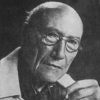
Andre Gide
André Paul Guillaume Gidewas a French author and winner of the Nobel Prize in Literature in 1947 "for his comprehensive and artistically significant writings, in which human problems and conditions have been presented with a fearless love of truth and keen psychological insight". Gide's career ranged from its beginnings in the symbolist movement, to the advent of anticolonialism between the two World Wars...
NationalityFrench
ProfessionAutobiographer
Date of Birth22 November 1869
CountryFrance
The artist who is after success lets himself be influenced by the public. Generally such an artist contributes nothing new, for the public acclaims only what it already knows, what it recognizes.
In other people's company I felt I was dull, gloomy, unwelcome, at once bored and boring...
I would like the events never to be told directly by the author, but rather to be introduced (and several times, from various angles) by those among the characters on whom they will have had any effect. I would like those events, in the account they will make of them, to appear slightly distorted; a kind of interest stems, for the reader, from the simple fact that he should need to restore. The story requires his collaboration in order to properly take shape.
Man: The most complex of beings, and thus the most dependent of beings. On all that made you up, you depend.
Though a revolution may call itself "national," it always marks the victory of a single party.
The world will be saved by one or two people.
The public always prefers to be reassured. There are those whose job this is. There are only too many.
An opinion, though it is original, does not necessarily differ from the accepted opinion; the important thing is that it does not try to conform to it.
Fish die belly upward, and rise to the surface. Its their way of falling.
Nothing excellent can be done without leisure.
Complete possession is proved only by giving. All you are unable to give possesses you.
Man's responsibility increases as that of the gods decreases.
Fear of ridicule begets the worst cowardice.
Through loyalty to the past, our mind refuses to realize that tomorrow's joy is possible only if today's makes way for it; that each wave owes the beauty of its line only to the withdrawal of the preceding one.