Andrew Jackson
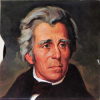
Andrew Jackson
Andrew Jacksonwas an American statesman who served as the seventh President of the United States from 1829 to 1837. He was born near the end of the colonial era, somewhere near the then-unmarked border between North and South Carolina, into a recently immigrated Scots-Irish farming family of relatively modest means. During the American Revolutionary War, Jackson, whose family supported the revolutionary cause, acted as a courier. At age 13, he was captured and mistreated by the British army. He later...
NationalityAmerican
ProfessionUS President
Date of Birth15 March 1767
CountryUnited States of America
Our brief was to create an environment where people could feel comfortable shopping, dining, relaxing and meeting friends and it is wonderful that our design has been acknowledged in this way.
The planter, the farmer, the mechanic, and the laborer... form the great body of the people of the United States, they are the bone and sinew of the country men who love liberty and desire nothing but equal rights and equal laws.
Fear not, the people may be deluded for a moment, but cannot be corrupted.
A lot of people are concerned about what's in these things because it says one thing and means another. You've really got to research it.
It was just neat looking around, seeing people up there watching us, seeing all the artwork and realizing all the important people who have been in here. This building just makes us feel small.
The great constitutional corrective in the hands of the people against usurpation of power, or corruption by their agents is the right of suffrage; and this when used with calmness and deliberation will prove strong enough.
People are my religion/Because I believe in them.
No free government can stand without virtue in the people, and a lofty spirit of partiotism.
As long as our government is administered for the good of the people, and is regulated by their will; as long as it secures to us the rights of person and property, liberty of conscience, and of the press, it will be worth defending.
In this point of the case the question is distinctly presented whether the people of the United States are to govern through representatives chosen by their unbiased suffrages or whether the money and power of a great corporation are to be secretly exerted to influence their judgment and control their decisions.
The President is the direct representative of the American people and is elected by the people and responsible to them.
To extraordinary powers of labor, both mental and physical, he unites that tact and judgement which are requisite to the successful direction of such an office as that of Chief Magistrate of a free people.
Trusting as we did to the virtue of the people, the real people, not the politicians and demagogues, we passed through the most responsible and trying scenes, sustained by the bone and sinew of the nation, the laborers of the land, where alone, in these days of Bank rule, and ragocrat corruption, real virtue and love of liberty is to be found.
In a country where offices are created solely for the benefit of the people no one man has any more intrinsic right to official station than another.