Andrew Marvell
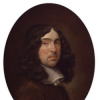
Andrew Marvell
Andrew Marvellwas an English metaphysical poet, satirist and politician who sat in the House of Commons at various times between 1659 and 1678. During the Commonwealth period he was a colleague and friend of John Milton. His poems range from the love-song "To His Coy Mistress", to evocations of an aristocratic country house and garden in "Upon Appleton House" and "The Garden", the political address "An Horatian Ode upon Cromwell's Return from Ireland", and the later personal and political satires...
NationalityEnglish
ProfessionPoet
Date of Birth31 March 1621
Therefore the love which us doth bind, But fate so enviously debars, Is the conjunction of the mind, And opposition of the stars.
Now therefore, while the youthful hue Sits on thy skin like morning dew, And while thy willing soul transpires At every pore with instant fires Now let us sport us while we may, And now, like amorous birds of prey, Rather at once our time devour Than languish in his slow-chapped power. Let us roll our strength and all Our sweetness up into one ball And tear our pleasures with rough strife Through the iron gates of life: Thus, while we cannot make our sun Stand still, yet we will make him run.
My vegetable love should grow Vaster than empires, and more slow;
Ye living lamps, by whose dear lightThe nightingale does sit so late;And studying all the summer night,Her matchless songs does meditate.
Ye living lamps, by whose dear light The nightingale does sit so late; And studying all the summer night, Her matchless songs does meditate.
Had it lived long, it would have been / Lilies without, roses within.
I have a garden of my own,/ But so with roses overgrown,/ And lilies, that you would it guess/ To be a little wilderness.
Here at the fountain's sliding foot, / Or at some fruit tree's mossy root, / Casting the body's vest aside, / My soul into the boughs does glide.
he world in all doth but two nations bear, The good, the bad; and these mixed everywhere
He hangs in shades the orange bright, / Like golden lamps in a green night.
Two Paradises t'were in one, to live in Paradise alone.
Fair quiet, have I found thee here / And innocence thy sister dear?
The tawny mowers enter next, / Who seem like Israelites to be / Walking on foot through a green sea.
But 'twas beyond a mortal's share / To wander solitary there: / Two paradises 'twere in one, / To live in paradise alone.