Antoine de Saint-Exupery
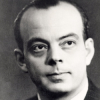
Antoine de Saint-Exupery
Antoine Marie Jean-Baptiste Roger, comte de Saint-Exupérywas a French writer, poet, aristocrat, journalist, and pioneering aviator. He became a laureate of several of France's highest literary awards and also won the U.S. National Book Award. He is best remembered for his novella The Little Princeand for his lyrical aviation writings, including Wind, Sand and Stars and Night Flight...
NationalityFrench
ProfessionPoet
Date of Birth29 June 1900
CityLyon, France
CountryFrance
No truth is proved, no truth achieved, by argument, and the ready-made truths men offer you are mere conveniences or drugs to make you sleep.
He who never says "no" is no true man.
A civilization is a heritage of beliefs, customs, and knowledge slowly accumulated in the course of centuries, elements difficult at times to justify by logic, but justifying themselves as paths when they lead somewhere, since they open up for man his inner distance.
When we think that the machine will harm man, then it is perhaps because we are not yet capable of judging the rapid changes it has brought about. We hardly feel at home in this landscape of mines and power stations. We have just moved into this new home that we have not even finished yet. Everything around us has changed so fast - personal relations, working conditions, habits. Even our state of mind is in turmoil.
A civilization is built on what is required of men, not on that which is provided for them.
To become a man is to be responsible; to be ashamed of miseries that you did not cause.
Man's progress is but a gradual discovery that his questions have no meaning.
Truth, for any man, is that which makes him a man.
One man may hit the mark, another blunder; but heed not these distinctions. Only from the alliance of the one, working with and through the other, are great things born.
For, to conceited men, all other men are admirers.
But the conceited man did not hear him. Conceited people never hear anything but praise.
No destiny attacks us from outside. But, within him, man bears his fate and there comes a moment when he knows himself vulnerable; and then, as in a vertigo, blunder upon blunder lures him.
There is no liberty except the liberty of some one making his way towards something. Such a man can be set free if you will teach him the meaning of thirst, and how to trace a path to a well. Only then will he embark upon a course of action that will not be without significance. You could not liberate a stone if there were no law of gravity - for where will the stone go, once it is quarried?
When the body sinks into death, the essence of man is revealed. Man is a knot, a web, a mesh into which relationships are tied. Only those relationships matter. The body is an old crock that nobody will miss. I have never known a man to think of himself when dying. Never.