Anton Chekhov
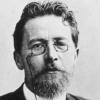
Anton Chekhov
Anton Pavlovich Chekhov was a Russian playwright and short story writer who is considered to be among the greatest writers of short fiction in history. His career as a playwright produced four classics and his best short stories are held in high esteem by writers and critics. Along with Henrik Ibsen and August Strindberg, Chekhov is often referred to as one of the three seminal figures in the birth of early modernism in the theatre. Chekhov practiced as a medical...
NationalityRussian
ProfessionPlaywright
Date of Birth29 January 1860
CityTaganrog, Russia
CountryRussian Federation
When performing an autopsy, even the most inveterate spiritualist would have to question where the soul is.
You look at any poetic creature: muslin, ether, demigoddess, millions of delights; then you look into the soul and find the most ordinary crocodile!
Everything should be first-rate in a person, his face, clothes, soul and thoughts.
When one sees one of the romantic creatures before him he imagines he is looking at some holy being, so wonderful that its one breath could dissolve him in a sea of a thousand charms and delights; but if one looks into the soul -- it's nothing but a common crocodile.
For the salvation of his soul the Muslim digs a well. It would be a fine thing if each of us were to leave behind a school, or a well, or something of the sort, so that life would not pass by and retreat into eternity without a trace.
They say philosophers and wise men are indifferent. Wrong. Indifference is a paralysis of the soul, a premature death.
The desire to serve the common good must without fail be a requisite of the soul, a necessity for personal happiness; if it issuesnot from there, but from theoretical or other considerations, it is not at all the same thing.
Not one of our mortal gauges is suitable for evaluating non-existence, for making judgments about that which is not a person.
It's not a matter of old or new forms; a person writes without thinking about any forms, he writes because it flows freely from his soul.
Liubov Andreevna: Are you still a student? Trofimov: I expect I shall be a student to the end of my days.
Never bring a cannon on stage in Act I unless you intend to fire it by the last act.
He is no longer a city dweller who has even once in his life caught a ruff or seen how, on clear and cool autumn days, flocks of migrating thrushes drift over a village. Until his death he will be drawn to freedom.
I have no faith in our hypocritical, false, hysterical, uneducated and lazy intelligentsia when they suffer and complain: their oppression comes from within. I believe in individual people. I see salvation in discrete individuals, intellectuals and peasants, strewn hither and yon throughout Russia. They have the strength, although there are few of them.
Is it our job to judge? The gendarme, policemen and bureaucrats have been especially prepared by fate for that job. Our job is towrite, and only to write.