Aristotle
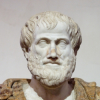
Aristotle
Aristotle was a Greek philosopher and scientist born in the city of Stagira, Chalkidice, on the northern periphery of Classical Greece. His father, Nicomachus, died when Aristotle was a child, whereafter Proxenus of Atarneus became his guardian. At eighteen, he joined Plato's Academy in Athens and remained there until the age of thirty-seven. His writings cover many subjects – including physics, biology, zoology, metaphysics, logic, ethics, aesthetics, poetry, theater, music, rhetoric, linguistics, politics and government – and constitute the first comprehensive system...
NationalityGreek
ProfessionPhilosopher
Now all orators effect their demonstrative proofs by allegation either of enthymems or examples, and, besides these, in no other way whatever.
Of means of persuading by speaking there are three species: some consist in the character of the speaker; others in the disposing the hearer a certain way; others in the thing itself which is said, by reason of its proving, or appearing to prove the point.
We ought to be able to persuade on opposite sides of a question; as also we ought in the case of arguing by syllogism: not that we should practice both, for it is not right to persuade to what is bad; but in order that the bearing of the case may not escape us, and that when another makes an unfair use of these reasonings, we may be able to solve them.
Legislative enactments proceed from men carrying their views a long time back; while judicial decisions are made off hand.
It is easier to get one or a few of good sense, and of ability to legislate and adjudge, than to get many.
Rhetoric is useful because truth and justice are in their nature stronger than their opposites; so that if decisions be made, not in conformity to the rule of propriety, it must have been that they have been got the better of through fault of the advocates themselves: and this is deserving reprehension.
Rhetoric is the counterpart of logic; since both are conversant with subjects of such a nature as it is the business of all to have a certain knowledge of, and which belong to no distinct science. Wherefore all men in some way participate of both; since all, to a certain extent, attempt, as well to sift, as to maintain an argument; as well to defend themselves, as to impeach.
It is well said, then, that it is by doing just acts that the just man is produced, and by doing temperate acts the temperate man; without doing these no one would have even a prospect of becoming good. But most people do not do these, but take refuge in theory and think they are being philosophers and will become good in this way, behaving somewhat like patients who listen attentively to their doctors, but do none of the things they are ordered to do.
He then alone will strictly be called brave who is fearless of a noble death, and of all such chances as come upon us with sudden death in their train.
Bravery is a mean state concerned with things that inspire confidence and with things fearful ... and leading us to choose danger and to face it, either because to do so is noble, or because not to do so is base. But to court death as an escape from poverty, or from love, or from some grievous pain, is no proof of bravery, but rather of cowardice.
Equity is that idea of justice which contravenes the written law.
There are, then, three states of mind ... two vices--that of excess, and that of defect; and one virtue--the mean; and all these are in a certain sense opposed to one another; for the extremes are not only opposed to the mean, but also to one another; and the mean is opposed to the extremes.
Irrational passions would seem to be as much a part of human nature as is reason.
For pleasure is a state of soul, and to each man that which he is said to be a lover of is pleasant.