Bertrand Russell
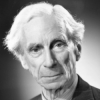
Bertrand Russell
Bertrand Arthur William Russell, 3rd Earl Russell, OM, FRSwas a British philosopher, logician, mathematician, historian, writer, social critic, political activist and Nobel laureate. At various points in his life he considered himself a liberal, a socialist, and a pacifist, but he also admitted that he had "never been any of these things, in any profound sense". He was born in Monmouthshire into one of the most prominent aristocratic families in the United Kingdom...
NationalityBritish
ProfessionPhilosopher
Date of Birth18 May 1872
There is in Aristotle an almost complete absence of what may be called benevolence or philanthropy. The sufferings of mankind . . . there is no evidence that they cause him unhappiness except when the sufferers happen to be his friends.
One of the main causes of trouble in the world is dogmatic and fanatical belief in some doctrine for which there is no adequate evidence
The typical Westerner wishes to be the cause of as many changes as possible in his environment; the typical Chinaman wishes to enjoy as much and as delicately as possible.
Bacon not only despised the syllogism, but undervalued mathematics, presumably as insufficiently experimental. He was virulently hostile to Aristotle , but he thought very highly of Democritus , Although he did not deny that the course of nature exemplifies a Divine purpose, he objected to any admixture of teleological explanation in the actual investigation of phenomena; everything, he held, should be explained as following necessarily from efficient causes .
Undoubtedly the desire for food has been and still is one of the main causes of political events.
People are zealous for a cause when they are not quite positive that it is true.
If everything has a cause, then God must have a cause. If there can be anything without a cause, it may just be the world as God...
Envy was one of the most potent causes of unhappiness.
It is preoccupation with possession, more than anything else, that prevents men from living freely and nobly
It is not by prayer and humility that you cause things to go as you wish, but by acquiring a knowledge of natural laws
Religion is based, I think, primarily and mainly upon fear. It is partly the terror of the unknown and partly, as I have said, the wish to feel that you have a kind of elder brother who will stand by you in all your troubles and disputes....A good world needs knowledge, kindliness, and courage; it does not need a regretful hankering after the past or a fettering of the free intelligence by the words uttered long ago by ignorant men.
Reason is a harmonizing, controlling force rather than a creative one.
Male superiority in former days was easily demonstrated, because if a woman questioned her husband's he could beat her. From superiority in this respect others were thought to follow. Men were more reasonable than women, more inventive, less swayed b
Some kind of philosophy is a necessity to all but the most thoughtless, and in the absence of knowledge it is almost sure to be a silly philosophy.