Bertrand Russell
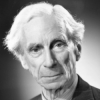
Bertrand Russell
Bertrand Arthur William Russell, 3rd Earl Russell, OM, FRSwas a British philosopher, logician, mathematician, historian, writer, social critic, political activist and Nobel laureate. At various points in his life he considered himself a liberal, a socialist, and a pacifist, but he also admitted that he had "never been any of these things, in any profound sense". He was born in Monmouthshire into one of the most prominent aristocratic families in the United Kingdom...
NationalityBritish
ProfessionPhilosopher
Date of Birth18 May 1872
Aristotle's metaphysics, roughly speaking, may be described as Plato diluted by common sense. He is difficult because Plato and common sense do not mix easily.
Those who advocate common usage in philosophy sometimes speak in a manner that suggests the mystique of the 'common man.'
The doctrine (of) maintaining that the language of daily life, with words used in their ordinary meanings, suffices for philosophy . . . I find myself totally unable to accept . . . . Because it makes almost inevitable the perpetuation amongst philosophers of the muddle-headedness they have taken over from common sense.
Inferences of Science and Common Sense differ from those of deductive logic and mathematics in a very important respect, namely, when the premises are true and the reasoning correct, the conclusion is only probable.
John Locke invented common sense, and only Englishmen have had it ever since!
The only thing that will redeem mankind is cooperation ... it is common to wish well to oneself, but in our technically unified world, wishing well to oneself is sure to be futile unless it is combined with wishing well to others.
Common sense, however it tries, cannot avoid being surprised from time to time.
The painter has to unlearn the habit of thinking that things seem to have the color which common sense says they 'really' have, and to learn the habit of seeing things as they appear.
It is preoccupation with possession, more than anything else, that prevents men from living freely and nobly
It is not by prayer and humility that you cause things to go as you wish, but by acquiring a knowledge of natural laws
Religion is based, I think, primarily and mainly upon fear. It is partly the terror of the unknown and partly, as I have said, the wish to feel that you have a kind of elder brother who will stand by you in all your troubles and disputes....A good world needs knowledge, kindliness, and courage; it does not need a regretful hankering after the past or a fettering of the free intelligence by the words uttered long ago by ignorant men.
Reason is a harmonizing, controlling force rather than a creative one.
Male superiority in former days was easily demonstrated, because if a woman questioned her husband's he could beat her. From superiority in this respect others were thought to follow. Men were more reasonable than women, more inventive, less swayed b
Some kind of philosophy is a necessity to all but the most thoughtless, and in the absence of knowledge it is almost sure to be a silly philosophy.