Bertrand Russell
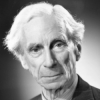
Bertrand Russell
Bertrand Arthur William Russell, 3rd Earl Russell, OM, FRSwas a British philosopher, logician, mathematician, historian, writer, social critic, political activist and Nobel laureate. At various points in his life he considered himself a liberal, a socialist, and a pacifist, but he also admitted that he had "never been any of these things, in any profound sense". He was born in Monmouthshire into one of the most prominent aristocratic families in the United Kingdom...
NationalityBritish
ProfessionPhilosopher
Date of Birth18 May 1872
Tobacco . . . is not prohibited in the Scriptures, though, as Samuel Butler points out, St. Paul would no doubt have denounced it if he had known of it.
Philosophy, though unable to tell us with certainty what is the true answer to the doubts which it raises, is able to suggest many possibilities which enlarge our thoughts and free them from the tyranny of custom.
Francis Bacon, a man who rose to eminence by betraying his friends, asserted, no doubt as one of the ripe lessons of experience, that ""knowledge is power
It is odd that neither the Church nor modern public opinion condemns petting, provided it stops short at a certain point. At what point sin begins is a matter as to which casuists differ. One eminently orthodox Catholic divine laid it down that a confessor may fondle a nun's breasts, provided he does it without evil intent. But I doubt whether modern authorities would agree with him on this point.
There's a Bible on that shelf there. But I keep it next to Voltaire - poison and antidote.
Be isolated, be ignored, be attacked, be in doubt, be frightened, but do not be silenced.
The problem with the wise is they are so filled with doubts while the dull are so certain.
Is there any knowledge in the world which is so certain that no reasonable man could doubt it?
Not to be absolutely certain is, I think, one of the essential things in rationality.
The universe may have a purpose, but nothing we know suggests that, if so, this purpose has any similarity to ours.
It is preoccupation with possession, more than anything else, that prevents men from living freely and nobly
It is not by prayer and humility that you cause things to go as you wish, but by acquiring a knowledge of natural laws
Religion is based, I think, primarily and mainly upon fear. It is partly the terror of the unknown and partly, as I have said, the wish to feel that you have a kind of elder brother who will stand by you in all your troubles and disputes....A good world needs knowledge, kindliness, and courage; it does not need a regretful hankering after the past or a fettering of the free intelligence by the words uttered long ago by ignorant men.
Reason is a harmonizing, controlling force rather than a creative one.