Bertrand Russell
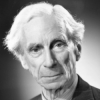
Bertrand Russell
Bertrand Arthur William Russell, 3rd Earl Russell, OM, FRSwas a British philosopher, logician, mathematician, historian, writer, social critic, political activist and Nobel laureate. At various points in his life he considered himself a liberal, a socialist, and a pacifist, but he also admitted that he had "never been any of these things, in any profound sense". He was born in Monmouthshire into one of the most prominent aristocratic families in the United Kingdom...
NationalityBritish
ProfessionPhilosopher
Date of Birth18 May 1872
Who ever heard a theologian preface his creed, or a politician conclude his speech with an estimate of the probable error of his opinion?
To avoid the various foolish opinions to which mankind are prone, no superhuman genius is required. A few simple rules will keep you, not from all error, but from silly error.
People are said to believe in God, or to disbelieve in Adam and Eve. But in such cases what is believed or disbelieved is that there is an entity answering a certain description. This, which can be believed or disbelieved is quite different from the actual entity (if any) which does answer the description. Thus the matter of belief is, in all cases, different in kind from the matter of sensation or presentation, and error is in no way analogous to hallucination. A hallucination is a fact, not an error; what is erroneous is a judgment based upon it.
In obedience to the feeling of reality, we shall insist that, in the analysis of propositions, nothing "unreal" is to be admitted. But, after all, if there is nothing unreal, how, it may be asked, could we admit anything unreal? The reply is that, in dealing with propositions, we are dealing in the first instance with symbols, and if we attribute significance to groups of symbols which have no significance, we shall fall into the error of admitting unrealities, in the only sense in which this is possible, namely, as objects described.
More cranks take up unfashionable errors than unfashionable truths.
Something of the hermit's temper is an essential element in many forms of excellence, since it enables men to resist the lure of popularity, to pursue important work in spite of general indifference or hostility, and arrive at opinions which are opposed to prevalent errors.
Why repeat the old errors, if there are so many new errors to commit?
None of our beliefs are quite true; all have at least a penumbra of vagueness and error.
There are infinite possibilities of error, and more cranks take up fashionable untruths than unfashionable truths.
A hallucination is a fact, not an error; what is erroneous is a judgment based upon it.
William James used to preach the "will-to-believe." For my part, I should wish to preach the "will-to-doubt." None of our beliefs are quite true; all at least have a penumbra of vagueness and error. What is wanted is not the will to believe, but the will to find out, which is the exact opposite.
It is preoccupation with possession, more than anything else, that prevents men from living freely and nobly
It is not by prayer and humility that you cause things to go as you wish, but by acquiring a knowledge of natural laws
Religion is based, I think, primarily and mainly upon fear. It is partly the terror of the unknown and partly, as I have said, the wish to feel that you have a kind of elder brother who will stand by you in all your troubles and disputes....A good world needs knowledge, kindliness, and courage; it does not need a regretful hankering after the past or a fettering of the free intelligence by the words uttered long ago by ignorant men.