Bertrand Russell
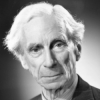
Bertrand Russell
Bertrand Arthur William Russell, 3rd Earl Russell, OM, FRSwas a British philosopher, logician, mathematician, historian, writer, social critic, political activist and Nobel laureate. At various points in his life he considered himself a liberal, a socialist, and a pacifist, but he also admitted that he had "never been any of these things, in any profound sense". He was born in Monmouthshire into one of the most prominent aristocratic families in the United Kingdom...
NationalityBritish
ProfessionPhilosopher
Date of Birth18 May 1872
The best practical advice I can give to the present generation is to practice the virtue which the Christians call love.
There are two ways of avoiding fear: one is by persuading ourselves that we are immune from disaster, and the other is by the practice of sheer courage. The latter is difficult, and to everybody becomes impossible at a certain point. The former has therefore always been more popular. Primitive magic has the purpose of securing safety, either by injuring enemies, or by protecting oneself by talismans, spells, or incantations.
The practice of inhibiting impulses, which is to a great extent necessary to civilized life, makes mistakes easier, by preventing experience of the actions to which a desire would otherwise lead, and by often causing the inhibited impulses themselves to be unnoticed or quickly forgotten.
The harm that theology has done is not to create cruel impulses, but to give them the sanction of what professes to be lofty ethic, and to confer an apparently sacred character upon practices which have come down from more ignorant and barbarous times.
Gradually, by selective breeding, the congenital differences between rulers and ruled will increase until they become almost different species. A revolt of the plebs would become as unthinkable as an organized insurrection of sheep against the practice of eating mutton.
An atheist, like a Christian, holds that we can know whether or not there is a God. The Christian holds that we can know there is a God; the atheist, that we can know there is not. The Agnostic suspends judgment, saying that there are not sufficient grounds either for affirmation or for denial. At the same time, an Agnostic may hold that the existence of God, though not impossible, is very improbable; he may even hold it so improbable that it is not worth considering in practice. In that case, he is not far removed from atheism.
We have in fact, two kinds of morality, side by side: one which we preach, but do not practice, and another which we practice, but seldom preach.
It is preoccupation with possession, more than anything else, that prevents men from living freely and nobly
It is not by prayer and humility that you cause things to go as you wish, but by acquiring a knowledge of natural laws
Religion is based, I think, primarily and mainly upon fear. It is partly the terror of the unknown and partly, as I have said, the wish to feel that you have a kind of elder brother who will stand by you in all your troubles and disputes....A good world needs knowledge, kindliness, and courage; it does not need a regretful hankering after the past or a fettering of the free intelligence by the words uttered long ago by ignorant men.
Reason is a harmonizing, controlling force rather than a creative one.
Male superiority in former days was easily demonstrated, because if a woman questioned her husband's he could beat her. From superiority in this respect others were thought to follow. Men were more reasonable than women, more inventive, less swayed b
Some kind of philosophy is a necessity to all but the most thoughtless, and in the absence of knowledge it is almost sure to be a silly philosophy.
Ignore fact and reason, live entirely in the world of your own fantastic and myth-producing passions; do this whole-heartedly and with conviction, and you will become one of the prophets of your age.