Bertrand Russell
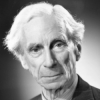
Bertrand Russell
Bertrand Arthur William Russell, 3rd Earl Russell, OM, FRSwas a British philosopher, logician, mathematician, historian, writer, social critic, political activist and Nobel laureate. At various points in his life he considered himself a liberal, a socialist, and a pacifist, but he also admitted that he had "never been any of these things, in any profound sense". He was born in Monmouthshire into one of the most prominent aristocratic families in the United Kingdom...
NationalityBritish
ProfessionPhilosopher
Date of Birth18 May 1872
As soon as it is held that any belief, no matter what, is important for some other reason than that it is true, a whole host of evils is ready to spring up.
Thee will find out in time that I have a great love of professing vile sentiments, I don't know why, unless it springs from long efforts to avoid priggery.
There is... in our day, a powerful antidote to nonsense, which hardly existed in earlier times - I mean science. Science cannot be ignored or rejected, because it is bound up with modern technique; it is essential alike to prosperity in peace and to victory in war. That is, perhaps from an intellectual point of view, the most hopeful feature of our age, and the one which makes it most likely that we shall escape complete submersion in some new or old superstition.
It is essential to happiness that our way of living should spring from our own deep impulses and not from the accidental tastes and desires of those who happen to be our neighbors, or even our relations.
The raw fruits of the earth were made for human sustenance. Even the white tails of rabbits, according to some theologians, have a purpose, namely to make it easier for sportsmen to shoot them. There are, it is true, some inconveniences: lions and tigers are too fierce, the summer is too hot, and the winter too cold. But these things only began after Adam ate the apple; I before that, all animals were vegetarians, and the season was always spring. If only Adam had been content with peaches and nectarines, grapes and pears and pineapples, these blessings would still be ours.
Meantime, the world in which we exist has other aims. But it will pass away, burnt up in the fire of its own hot passions; and from its ashes will spring a new and younger world, full of fresh hope, woth the light of morning in its eyes.
We know too much and feel too little. At least, we feel too little of those creative emotions from which a good life springs.
Italy, and the spring and first love all together should suffice to make the gloomiest person happy.
If politics is to become scientific, and if the event is not to be constantly surprising, it is imperative that our political thinking should penetrate more deeply into the springs of human action
It is preoccupation with possession, more than anything else, that prevents men from living freely and nobly
It is not by prayer and humility that you cause things to go as you wish, but by acquiring a knowledge of natural laws
Religion is based, I think, primarily and mainly upon fear. It is partly the terror of the unknown and partly, as I have said, the wish to feel that you have a kind of elder brother who will stand by you in all your troubles and disputes....A good world needs knowledge, kindliness, and courage; it does not need a regretful hankering after the past or a fettering of the free intelligence by the words uttered long ago by ignorant men.
Reason is a harmonizing, controlling force rather than a creative one.
Male superiority in former days was easily demonstrated, because if a woman questioned her husband's he could beat her. From superiority in this respect others were thought to follow. Men were more reasonable than women, more inventive, less swayed b